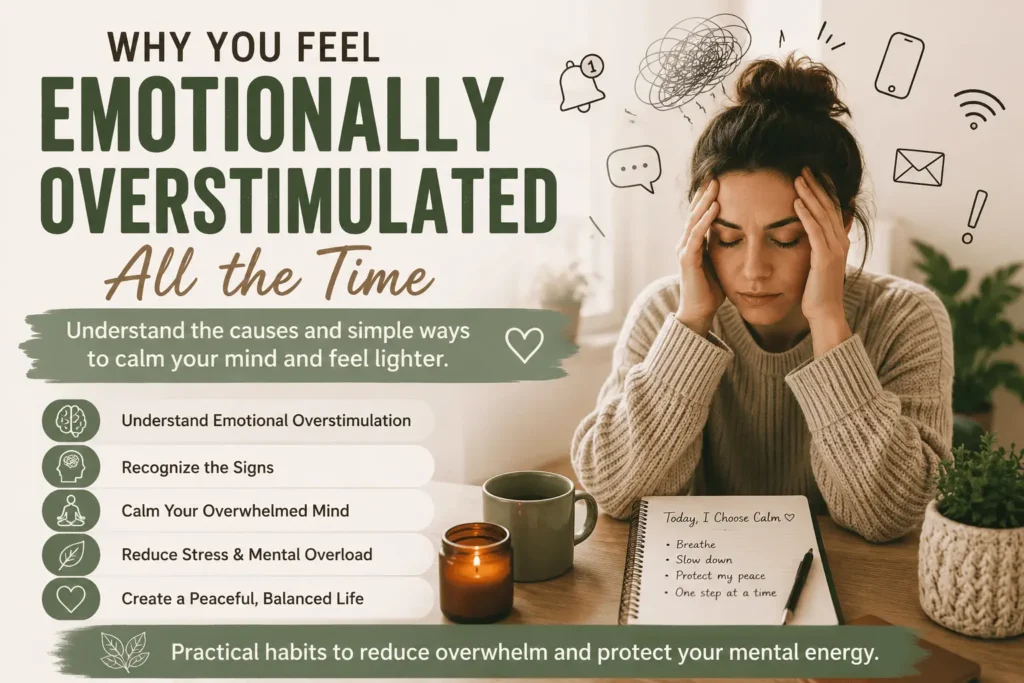
Have you ever felt like your brain simply cannot handle one more thing?
Even small noises, notifications, conversations, responsibilities, or emotional situations can suddenly start feeling overwhelming.
Sometimes emotional overstimulation does not look dramatic from the outside. You may still continue working, responding to messages, or finishing daily tasks while internally feeling mentally overloaded and emotionally exhausted.
Modern life constantly floods the brain with stimulation.
From screens and notifications to emotional stress and information overload, many people rarely give their minds a real chance to slow down anymore.
If you have been feeling emotionally overwhelmed lately, you are not alone.
What Does Emotional Overstimulation Feel Like?
Emotional overstimulation happens when your brain receives more mental and emotional input than it can comfortably process.
Over time, this can leave you feeling:
- mentally exhausted
- emotionally drained
- irritated easily
- unable to focus
- emotionally sensitive
- anxious or overwhelmed
- mentally “full”
Sometimes people assume they are simply lazy or unmotivated when in reality their brain is overstimulated and struggling to recover.
Constant Notifications Keep Your Brain Alert
Many people spend the entire day surrounded by interruptions.
Your brain constantly reacts to:
- notifications
- social media
- emails
- messages
- background noise
- videos
- stressful headlines
Even small interruptions force your attention to shift repeatedly.
Over time, this creates mental fatigue and emotional overload.
This is also closely connected with How to Reduce Digital Overload and Feel Less Drained, especially if screen time has been making your brain feel constantly tired lately.
Your Brain Was Not Designed for Constant Input
Modern life gives the brain very little quiet time.
Many people move from:
- work stress
- scrolling
- multitasking
- entertainment
- conversations
- responsibilities
without any real mental pause between activities.
Your brain never fully slows down.
This can make even simple daily tasks start feeling emotionally heavy.
Emotional Stress Builds Quietly Over Time
Not all emotional stress comes from major life problems.
Small daily pressures can slowly accumulate mentally.
Things like:
- feeling behind
- emotional pressure
- unresolved stress
- constant comparison
- busy schedules
- too much information
- lack of rest
can quietly increase emotional overwhelm over time.
Sometimes people do not realize how mentally overloaded they are until they suddenly feel emotionally exhausted by everything.
If this sounds familiar, you may also relate to Why Your Brain Feels Tired Even When You Didn’t Do Much.
Multitasking Can Increase Emotional Exhaustion
Many people try to handle too many forms of stimulation at once.
Examples include:
- watching videos while working
- checking notifications during conversations
- switching between tasks constantly
- listening to content all day long
This keeps the brain in a constant state of mental activity.
Over time, multitasking can make your mind feel overstimulated and emotionally scattered.
Overthinking Makes Overstimulation Worse
When your brain already feels overloaded, overthinking often increases the pressure even more.
Racing thoughts force your brain to continue processing stress long after situations are over.
This is one reason emotional overstimulation often becomes worse at night when everything finally gets quiet.
If racing thoughts have been affecting your sleep lately, you may also enjoy reading How to Stop Overthinking at Night and Sleep Peacefully.
Lack of Quiet Time Affects Mental Recovery
Many people no longer spend enough time in true mental quiet.
Even moments of rest often include:
- scrolling
- watching videos
- checking messages
- consuming information
But your brain needs periods without constant stimulation in order to recover properly.
Quiet moments can help:
- calm emotional overwhelm
- reduce stress
- improve focus
- support emotional balance
- reduce mental fatigue
Simple activities like:
- journaling
- stretching
- walking outside
- deep breathing
- sitting quietly
- reducing screen time
can help create more mental calm.
Emotional Overstimulation Can Affect Daily Life
When your brain becomes emotionally overstimulated, everyday life can start feeling harder than usual.
You may notice:
- lower patience
- brain fog
- emotional sensitivity
- difficulty concentrating
- low motivation
- feeling mentally “checked out”
- increased stress
Sometimes even small responsibilities begin feeling mentally exhausting.
This also connects closely with Signs You’re Mentally Exhausted and Need Rest, especially if emotional fatigue has been building for a long time.
You Do Not Need to “Earn” Rest
One of the biggest reasons people stay emotionally overstimulated is because they rarely allow themselves real recovery time.
Many people feel guilty:
- slowing down
- resting
- taking breaks
- doing less
But constantly pushing your brain without recovery eventually increases emotional exhaustion.
Rest is not laziness.
Mental recovery matters too.
You may also find helpful ideas in How to Take a Break Without Feeling Guilty (Simple Mental Reset Tips).
Small Habits Can Help Calm an Overstimulated Mind
You do not need a perfect routine to reduce emotional overstimulation.
Small calming habits often help more than people realize.
Helpful habits may include:
- reducing unnecessary notifications
- spending less time doomscrolling
- protecting sleep
- simplifying routines
- taking quiet breaks
- reducing multitasking
- creating screen-free moments
Even small changes can help your mind feel calmer over time.
Protecting Your Mental Energy Matters
Your brain processes thousands of small inputs every day.
Without recovery, emotional overstimulation can slowly turn into:
- chronic stress
- emotional exhaustion
- mental fatigue
- burnout
- overwhelm
Protecting your mental energy is not selfish.
It is part of maintaining emotional wellness and long-term mental balance.
If you have been feeling mentally overloaded lately, small moments of calm can make a bigger difference than you think.
FAQ
What does emotionally overstimulated mean?
Being emotionally overstimulated means your brain is processing more emotional or mental input than it can comfortably handle, which can lead to overwhelm, stress, and mental fatigue.
What causes emotional overstimulation?
Common causes include constant notifications, digital overload, multitasking, emotional stress, lack of rest, overthinking, and too much mental stimulation throughout the day.
What are signs of emotional overstimulation?
Signs may include irritability, emotional exhaustion, brain fog, anxiety, low patience, difficulty focusing, and feeling mentally overwhelmed.
How can I calm an overstimulated mind?
Reducing notifications, taking quiet breaks, protecting sleep, limiting multitasking, journaling, and spending less time scrolling can help calm an overstimulated mind.
Can emotional overstimulation cause mental exhaustion?
Yes. Constant emotional and mental stimulation can slowly drain mental energy and contribute to emotional exhaustion over time.