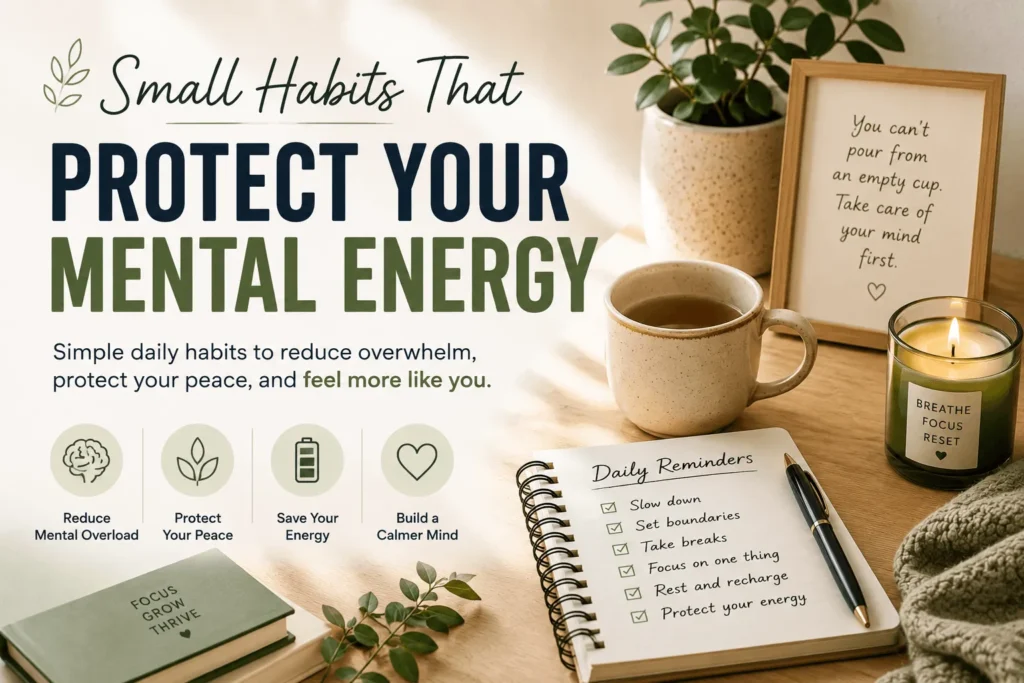
Mental exhaustion does not always happen suddenly.
Sometimes it builds quietly through small daily habits, constant stimulation, emotional pressure, and mental overload that slowly drain your energy over time.
Many people focus on protecting their physical energy while completely ignoring their mental energy.
But your mind needs recovery too.
When your mental energy becomes depleted, even simple tasks can start feeling overwhelming. You may notice more brain fog, emotional irritation, low motivation, difficulty focusing, or feeling mentally tired throughout the day.
The good news is that protecting your mental energy does not require a dramatic lifestyle change.
Small daily habits can make a surprisingly big difference.
Stop Starting Your Day With Information Overload
One of the fastest ways to drain mental energy is immediately overwhelming your brain with stimulation after waking up.
Many people begin their mornings by:
- checking notifications
- scrolling social media
- reading stressful news
- responding to messages
- multitasking too early
This instantly puts your brain into a reactive state.
Creating a calmer start to your morning can help protect your focus and emotional balance throughout the day.
If you are trying to create healthier daily routines, you may also enjoy reading How to Build a Simple Morning Routine That Actually Works.
Reduce Unnecessary Notifications
Constant notifications quietly interrupt your focus all day long.
Even short distractions force your brain to repeatedly switch attention, which slowly drains mental energy over time.
Not every app deserves immediate access to your attention.
Reducing unnecessary notifications can help:
- improve focus
- reduce overstimulation
- create mental calm
- lower stress levels
This also connects closely with How to Reduce Digital Overload and Feel Less Drained, especially if screen fatigue has been affecting your mental clarity lately.
Stop Multitasking Constantly
Multitasking often feels productive, but mentally it can become exhausting.
Jumping between:
- emails
- messages
- tasks
- videos
- social apps
- work responsibilities
forces your brain to constantly refocus.
Over time, this mental switching creates fatigue and reduces concentration.
Protecting your mental energy sometimes means slowing down and focusing on one thing at a time.
Give Yourself More Quiet Moments
Your brain needs moments without stimulation.
But modern life rarely allows mental silence.
Many people spend nearly every moment:
- consuming information
- listening to something
- checking screens
- scrolling endlessly
- thinking about tasks
Even a few quiet minutes each day can help your nervous system feel calmer.
Simple quiet activities like:
- journaling
- stretching
- walking outside
- sitting without your phone
- deep breathing
can help reduce mental overwhelm naturally.
If your mind has been feeling mentally crowded lately, you may also find helpful ideas in How to Reduce Mental Clutter and Feel More Clear-Headed.
Protect Your Sleep More Seriously
Poor sleep affects far more than physical energy.
It also impacts:
- emotional regulation
- focus
- patience
- mental clarity
- stress recovery
Many people try to push through mental exhaustion without realizing their brain simply has not recovered properly.
Small nighttime habits can support better mental recovery over time.
This naturally relates to How to Stop Overthinking at Night and Sleep Peacefully, especially if racing thoughts make it difficult to fully relax before bed.
Stop Treating Rest Like Laziness
One of the biggest reasons people become mentally drained is because they feel guilty for resting.
Modern productivity culture often makes people feel like they must always:
- stay busy
- stay available
- stay productive
- stay mentally active
But constant pressure without recovery slowly drains mental energy.
Rest is not wasted time.
Recovery helps your brain function more clearly and effectively.
If this is something you struggle with, you may also enjoy reading How to Take a Break Without Feeling Guilty (Simple Mental Reset Tips).
Spend Less Time Doomscrolling
Endless scrolling can quietly overwhelm your brain without you realizing it.
Your mind constantly processes:
- information
- opinions
- emotional content
- stressful headlines
- comparison
- stimulation
Even when you are physically resting, your brain may still feel mentally overloaded afterward.
Reducing doomscrolling can help protect emotional balance and mental clarity.
Simplify Small Daily Decisions
Decision fatigue is real.
When your brain makes too many small decisions throughout the day, mental energy slowly decreases.
Even simple choices like:
- what to wear
- what to eat
- what to prioritize
- when to respond
- what task to start next
can become mentally exhausting when your brain is already overloaded.
Simplifying routines and reducing unnecessary decisions can help preserve mental energy.
You may also enjoy reading How to Reduce Decision Fatigue in Daily Life for more practical ideas.
Learn to Say No More Often
Protecting your mental energy sometimes requires protecting your time and attention too.
Constantly saying yes to:
- extra responsibilities
- emotional demands
- unnecessary conversations
- overwhelming schedules
can leave very little space for mental recovery.
Healthy boundaries are not selfish.
They help prevent emotional exhaustion and mental overload.
Stop Filling Every Moment With Productivity
Not every moment needs to be optimized.
Many people unintentionally create mental exhaustion by constantly trying to:
- improve
- optimize
- work
- organize
- plan
- stay productive
all day long.
Your brain benefits from slower moments too.
Sometimes mental clarity improves when you stop forcing constant productivity.
Mental Energy Matters More Than Many People Realize
Mental exhaustion affects:
- focus
- emotional balance
- motivation
- patience
- creativity
- stress tolerance
When your mental energy stays depleted for too long, daily life naturally starts feeling heavier.
Protecting your mind is not laziness.
It is part of maintaining long-term well-being.
Small Habits Create Long-Term Mental Calm
You do not need a perfect routine to support your mental wellness.
Small consistent habits often matter more than dramatic changes.
Even simple adjustments like:
- reducing notifications
- taking quiet breaks
- protecting sleep
- slowing down mentally
- limiting overstimulation
can help your brain feel calmer, clearer, and less emotionally overwhelmed over time.
Mental wellness is not built through perfection.
It is built through small daily choices that help protect your peace and mental energy little by little.
FAQ
How can I protect my mental energy daily?
Small habits like reducing notifications, getting enough sleep, limiting multitasking, taking quiet breaks, and reducing overstimulation can help protect your mental energy daily.
What drains mental energy the most?
Constant multitasking, digital overload, emotional stress, lack of sleep, endless scrolling, and overstimulation are some of the biggest causes of mental exhaustion.
Why do I feel mentally drained all the time?
Mental fatigue often builds gradually from stress, information overload, emotional pressure, and lack of proper mental recovery.
Can overthinking drain mental energy?
Yes. Constant overthinking forces your brain to stay mentally active for long periods, which can increase mental fatigue and emotional exhaustion.
Is protecting mental energy important?
Yes. Protecting your mental energy helps improve focus, emotional balance, productivity, stress management, and overall mental wellness.