AI Overview Summary
A personal life management system helps you organize your daily responsibilities using simple, repeatable systems instead of relying on memory or motivation. By creating routines for planning, home organization, finances, health, digital files, and personal records, you can reduce stress, avoid forgetting important tasks, and make everyday life easier to manage.
Quick Answer
A personal life management system is a simple set of routines, habits, and organizational methods that help you manage your time, responsibilities, home, finances, health, and digital life without feeling overwhelmed. Instead of relying on memory or motivation, it creates repeatable systems that make everyday life easier and more organized.
Is This You?
Do any of these situations sound familiar?
- You constantly feel like you’re forgetting something important.
- Your to-do list keeps growing, but you never feel caught up.
- Your home, digital files, or paperwork always seem slightly out of control.
- You spend too much time looking for documents, passwords, or important information.
- Every week feels reactive instead of planned.
- You feel busy all day but rarely feel organized.
If you nodded “yes” to even a few of these, you’re not alone.
Many people believe they’re simply “bad at staying organized.” In reality, the problem usually isn’t a lack of discipline—it’s the absence of a reliable system.
Without a clear structure, every small responsibility competes for your attention. Over time, that constant mental juggling creates stress, decision fatigue, and the feeling that life is always one step ahead of you.
The good news is that you don’t need to become a naturally organized person.
You simply need a better system.
At a Glance
| Best For | Anyone who wants to feel more organized and less overwhelmed |
|---|---|
| Time Needed to Set Up | 1–2 hours initially |
| Difficulty | Beginner Friendly |
| Long-Term Benefit | Less stress, better productivity, improved organization |
| Works Well With | Daily planning, weekly reviews, healthy routines, digital organization |
Table of Contents
- Why Most People Feel Disorganized
- What Is a Personal Life Management System?
- Why Systems Work Better Than Motivation
- The Seven Core Life Systems Everyone Needs
- How to Build Your Personal Life Management System
- Common Mistakes That Keep People Disorganized
- A Real-Life Example
- 30-Day Implementation Plan
- Personal Life Management Checklist
- Frequently Asked Questions
Why Most People Feel Disorganized
Most people don’t struggle because they have too many responsibilities.
They struggle because every responsibility lives in a different place.
Appointments are stored in one app.
Bills are buried inside emails.
Passwords are written on sticky notes.
Shopping lists are scattered across multiple notebooks.
Important documents are hidden inside random folders.
Tasks stay inside your head until you suddenly remember them at the worst possible moment.
Eventually, your brain becomes your storage system.
Unfortunately, your brain was never designed for that job.
Instead of helping you think creatively and solve problems, it spends its energy trying to remember hundreds of small responsibilities.
This creates what psychologists often call “mental load”—the invisible burden of remembering, planning, and managing everyday life.
That’s why even simple tasks can start to feel exhausting.
If you’ve ever wondered why your mind feels tired even on days when you haven’t done much physically, you’ll probably relate to Why Your Brain Feels Tired Even When You Didn’t Do Much.
Organization Isn’t About Being Neat
One of the biggest misconceptions about organization is believing it means having a spotless home or perfectly labeled folders.
Real organization isn’t about perfection.
It’s about reducing friction.
Think about two people.
Person A spends twenty minutes every morning searching for keys, checking their calendar, remembering appointments, and deciding what to do first.
Person B has one place for their keys, one calendar, a short daily plan, and a simple weekly review.
Neither person works harder.
But one has fewer decisions to make before breakfast.
That’s what a life management system does.
It removes unnecessary decisions so you can focus on what actually matters.
If daily planning feels overwhelming, How to Plan Your Day Effectively Without Feeling Stressed can help you simplify the process.
What Is a Personal Life Management System?
A personal life management system is a collection of simple systems that work together to help you manage everyday life.
Instead of relying on motivation or memory, you create repeatable processes for handling recurring responsibilities.
Think of it as building an operating system for your life.
Whenever something needs your attention, you already know where it belongs and what to do next.
A good life management system doesn’t make life busier.
It makes life simpler.
Rather than asking yourself:
“What should I do now?”
you begin asking:
“What does my system tell me to do?”
That small shift dramatically reduces stress and mental clutter.
It’s similar to how businesses use systems instead of depending on individual employees to remember every task.
Your personal life deserves the same level of organization.
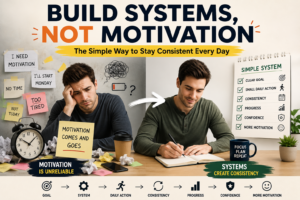
Why Systems Always Beat Motivation
Many people wait until they feel motivated before becoming organized.
Unfortunately, motivation comes and goes.
Some days you’ll feel energetic.
Other days you’ll feel tired, stressed, distracted, or overwhelmed.
If your organization depends on motivation, your system disappears whenever motivation does.
Systems work differently.
They continue functioning even on difficult days.
Imagine brushing your teeth.
You probably don’t wake up every morning feeling motivated to brush your teeth.
You simply do it because it’s part of your routine.
The same principle applies to planning your day, managing your finances, organizing paperwork, or reviewing your weekly priorities.
Small systems repeated consistently create results that motivation never can.
That’s why How to Stay Consistent With Your Goals Without Losing Motivation is one of the most valuable habits you can build alongside a life management system.
The SmartHelpHub Life Management Framework
Instead of trying to organize everything at once, think of your life as a collection of connected systems.
We call this the Life Management Framework.
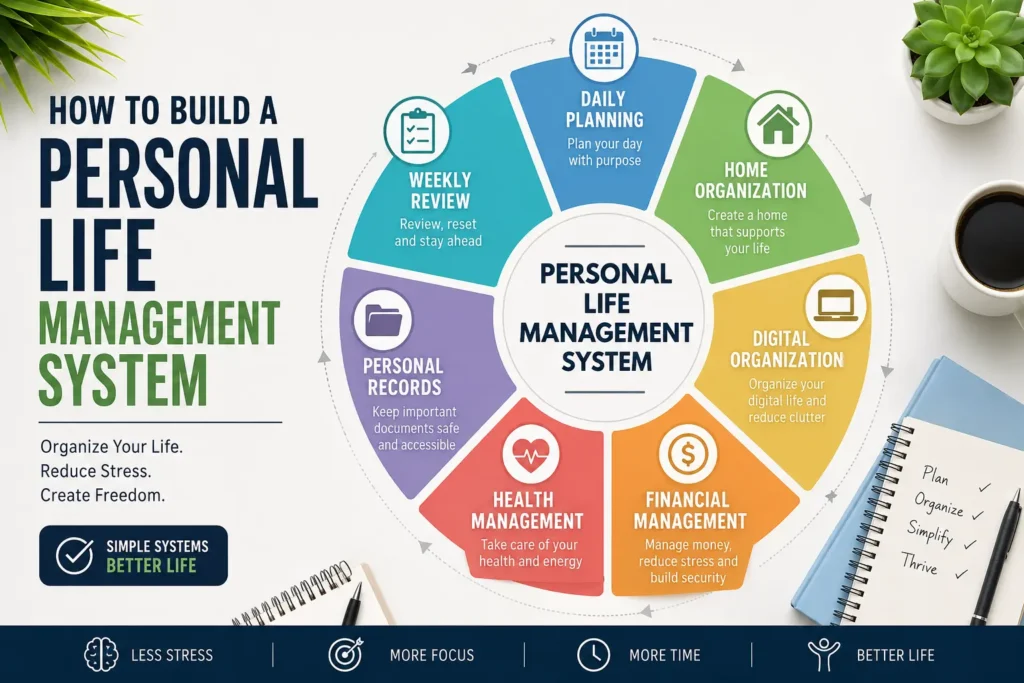
Imagine seven circles working together.
When one area becomes disorganized, it often affects the others.
The seven core systems are:
1. Daily Planning System
Managing today’s priorities.
Tasks Are Not Appointments — Keep Them Separate
A common reason systems break down is mixing two different things into one list:
- Tasks are actions with no fixed time (buy groceries, call the insurance company, clean the garage)
- Appointments happen at a specific date and time (2pm doctor visit, a team meeting)
Put appointments on a calendar and tasks on a task list. Mixing them is one of the most common causes of missed commitments and double-booked afternoons — your calendar gets cluttered with things that don’t need a time slot, and your task list gets cluttered with things that do.
2. Weekly Review System
Resetting and preparing for the week ahead.
3. Home Organization System
Keeping your living environment functional and easy to maintain.
4. Digital Organization System
Managing files, emails, passwords, and digital clutter.
5. Financial Organization System
Keeping bills, subscriptions, savings, and budgets under control.
6. Health Management System
Appointments, medications, exercise, sleep, and healthy routines.
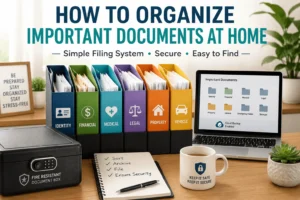
7. Personal Records System
Important documents, insurance, IDs, warranties, emergency contacts, and essential information.
You don’t need to perfect all seven immediately.
Building one system at a time creates lasting change without feeling overwhelming.
Key Takeaway
Most people don’t need more productivity tips.
They need fewer decisions.
A personal life management system helps you replace constant mental effort with simple, repeatable processes that reduce stress and create more space for what truly matters.
The Seven Core Systems of an Organized Life
Think of your life as a house.
A house isn’t supported by one large pillar—it stands because many smaller supports work together.
Your life works the same way.
Many people try to become “more organized” by focusing on only one area, such as buying a planner or cleaning their workspace. While these changes may help temporarily, they rarely solve the bigger problem.
A lasting personal life management system is built from several connected systems that support one another.
If one system begins to fail, the others can help keep your life running smoothly.
Let’s look at each one.
1. Daily Planning System
Your daily planning system helps you answer one simple question every morning:
“What deserves my attention today?”
Without a daily system, every task feels equally important.
You wake up, check your phone, respond to messages, remember an overdue bill, think about tomorrow’s meeting, notice the kitchen needs cleaning, and suddenly your day feels chaotic before it has even started.
A daily planning system removes that confusion.
Instead of reacting to everything, you begin each day with clear priorities.
A simple daily system might include:
- Reviewing your calendar
- Writing down your three most important tasks
- Estimating how much time each task needs
- Leaving space for unexpected interruptions
- Reviewing your progress before ending the day
Notice that none of these steps take very long.
The goal isn’t to create the perfect schedule.
It’s to reduce uncertainty.
If you’re still struggling with daily planning, How to Create a Daily To-Do List That You’ll Actually Follow explains how to build a realistic task list that actually gets completed.
You may also benefit from How to Plan Your Day Effectively Without Feeling Stressed, which shows how to organize your schedule without making it feel overwhelming.
Daily System Checklist
✔ Check today’s calendar
✔ Review yesterday’s unfinished tasks
✔ Choose your Top 3 priorities
✔ Estimate available time
✔ Leave room for unexpected events
✔ Review progress before bedtime
2. Weekly Review System
If your daily system helps you survive today…
Your weekly system helps you stay ahead of next week.
This is one of the most overlooked habits among organized people.
Many individuals spend every Monday figuring out what needs attention.
Highly organized people already know.
That’s because they review their week before it begins.
A weekly review doesn’t need to take hours.
Even 20–30 minutes can dramatically improve your sense of control.
During your review, ask yourself:
- What appointments do I have this week?
- What deadlines are approaching?
- What unfinished tasks need attention?
- What personal goals should I focus on?
- Are there any errands or purchases I should plan now?
Doing this once a week reduces dozens of small decisions later.
Instead of constantly remembering responsibilities throughout the week, you’ve already created a plan.
If you’re looking for a practical way to build this habit, Your Weekly Reset Guide is the perfect companion.
Weekly Review Checklist
Review your calendar
Plan important appointments
Prepare upcoming deadlines
Schedule errands
Review finances
Meal planning
Household priorities
Personal goals
Digital cleanup
Prepare Monday
3. Home Organization System
Your home should support your daily life—not create extra work.
Many people believe an organized home means owning fewer possessions or keeping everything perfectly clean.
That’s not necessarily true.
A functional home is simply one where everyday items have a permanent place.
When everything has a home, you spend less time searching and more time living.
Start with areas you use every day.
For example:
- Keys
- Wallet
- Phone charger
- Important documents
- Laundry
- Cleaning supplies
The simpler your systems are, the more likely you’ll actually maintain them.
Don’t organize your house to impress visitors.
Organize it to make tomorrow easier.
If life feels messy in general, Easy Ways to Stay Organized When Life Feels Overwhelming offers practical strategies that complement this system.
Simple Home Systems
| Area | System |
|---|---|
| Keys | One designated bowl or hook |
| Bills | One folder or tray |
| Laundry | Specific laundry day |
| Process immediately | |
| Groceries | Shared shopping list |
| Cleaning | Small daily routine |
4. Digital Organization System
Many people spend more time searching their computers than searching their homes.
Digital clutter creates the same mental stress as physical clutter.
Unread emails.
Random downloads.
Duplicate photos.
Scattered files.
Old documents.
Hundreds of browser tabs.
Every small piece of digital clutter adds invisible mental weight.
Fortunately, creating a digital system is easier than most people think.
Start with four simple rules:
One Folder Structure
Create consistent folders instead of saving files randomly.
Example:
Documents
→ Personal
→ Financial
→ Medical
→ Work
→ Travel
Email Organization
Delete junk.
Archive old conversations.
Create folders for important categories.
Unsubscribe from newsletters you never read.
Password Management
Stop storing passwords in random notebooks.
Use a trusted password manager whenever possible.
Keep recovery codes in one secure location.
Weekly Digital Cleanup
Spend just ten minutes each week:
Delete unnecessary downloads.
Organize files.
Close old browser tabs.
Update important documents.
Back up essential information.
Small maintenance prevents overwhelming digital clutter later.
If notifications and constant phone use interrupt your focus, How to Stop Checking Your Phone Every Few Minutes can help you build healthier digital habits.
You may also find Digital Decluttering Tips useful for reducing digital overload.
Why These Four Systems Matter Most
Notice something interesting.
None of these systems require extraordinary discipline.
They simply reduce the number of decisions you have to make every day.
When your calendar is organized…
You stop worrying about appointments.
When your files are organized…
You stop searching for documents.
When your home has simple systems…
You stop wasting energy looking for everyday items.
Organization isn’t about doing more.
It’s about making everyday life easier.
The remaining three systems—Financial Organization, Health Management, and Personal Records—bring everything together into a complete life management system. Once those are in place, you’ll have a practical framework that supports nearly every area of your daily life.
5. Financial Organization System
Money is one of the biggest sources of everyday stress—not always because people don’t earn enough, but because financial responsibilities are scattered across multiple places.
Think about everything you need to remember:
- Monthly bills
- Credit card payments
- Insurance renewals
- Loan repayments
- Subscription services
- Savings goals
- Tax documents
- Emergency expenses
If each of these lives in a different app, email, notebook, or drawer, it’s easy to miss something important.
A financial organization system gives every financial responsibility a permanent place.
Instead of relying on memory, you rely on a simple process.
Start with One Financial Hub
Choose one place to manage your financial life.
This could be:
- A spreadsheet
- A budgeting app
- A notebook
- A digital document
The tool doesn’t matter.
Consistency does.
Your financial hub should include:
- Monthly income
- Fixed expenses
- Variable expenses
- Savings goals
- Upcoming bill due dates
- Annual renewals
- Emergency contacts for banks and insurance
Automate Whenever Possible
The fewer financial decisions you make repeatedly, the easier life becomes.
Whenever it’s safe to do so, automate recurring tasks such as:
- Utility bill payments
- Savings transfers
- Credit card payments
- Insurance renewals
Automation reduces the chance of forgetting important deadlines.
Review Your Finances Weekly
Spend just ten minutes each week reviewing:
✔ Bills paid
✔ Upcoming expenses
✔ Subscription charges
✔ Bank balances
✔ Savings progress
Small weekly reviews prevent large financial surprises later.
Financial Organization Checklist
| Task | Frequency |
|---|---|
| Review bank accounts | Weekly |
| Pay bills | Weekly |
| Check subscriptions | Monthly |
| Update budget | Monthly |
| Review savings goals | Monthly |
| Backup financial records | Quarterly |
6. Health Management System
Your health affects every other system in your life.
When you’re tired, sick, or overwhelmed, even simple tasks become difficult.
That’s why health deserves its own management system.
Most people only think about their health when something goes wrong.
A better approach is creating routines that support your well-being before problems appear.
Your health system doesn’t need to be complicated.
It simply needs to help you stay consistent.
Keep Essential Information Together
Store important information in one place.
For example:
- Medical history
- Current medications
- Allergies
- Emergency contacts
- Insurance information
- Vaccination records
Whether you keep these digitally or in a physical folder, make sure they are easy to access.
Schedule Preventive Care
Don’t wait until you remember.
Add recurring reminders for:
- Annual health checkups
- Dental visits
- Eye exams
- Prescription renewals
- Routine screenings
Your calendar should remember these for you.
Support Your Everyday Health
Your health system should also include simple habits like:
- Drinking enough water
- Sleeping consistently
- Daily movement
- Healthy meals
- Managing stress
These habits don’t just improve your health—they make every other part of your life easier to manage.
If you’re trying to improve your daily habits, Simple Morning Routine That Actually Works is a great place to start.
At the end of the day, Simple Night Routine for Better Sleep can help you recharge and prepare for tomorrow.
Weekly Health Review
Ask yourself:
✔ Did I sleep well this week?
✔ Am I drinking enough water?
✔ Have I been physically active?
✔ Am I feeling unusually stressed?
✔ Do I have any upcoming appointments?
These small check-ins help you notice problems before they become bigger challenges.
7. Personal Records System
Imagine needing an important document urgently.
Would you know exactly where to find it?
Many people wouldn’t.
Birth certificates.
Insurance papers.
Property documents.
Tax records.
Warranties.
Educational certificates.
Passports.
Emergency contacts.
These documents are often stored in random drawers or forgotten folders until they’re suddenly needed.
A personal records system eliminates that stress.
Create One Secure Location
Keep all important records together.
You may prefer:
A physical filing box.
A locked cabinet.
An encrypted digital folder.
Or a combination of both.
The important thing is consistency.
Organize by Category
A simple structure works best.
Identity
Passport
Driver’s license
National ID
Birth certificate
Financial
Tax documents
Bank information
Investment records
Insurance
Medical
Medical reports
Vaccination records
Prescriptions
Emergency contacts
Property
Home documents
Vehicle records
Warranty information
Purchase receipts
Family
Marriage certificate
Children’s records
School documents
Emergency contacts
Review these documents once or twice each year to make sure everything stays current.
The Life Admin Checklist
Now let’s bring everything together.
Instead of remembering hundreds of small responsibilities, use this master checklist.
Daily
✔ Review today’s calendar
✔ Check your top three priorities
✔ Respond to important messages
✔ Put items back in their proper place
✔ Prepare tomorrow before bed
Weekly
✔ Review calendar
✔ Update to-do list
✔ Grocery planning
✔ Meal planning
✔ Laundry
✔ Pay bills
✔ Digital cleanup
✔ Home reset
✔ Review goals
Monthly
✔ Budget review
✔ Subscription review
✔ Organize paperwork
✔ Backup important files
✔ Clean email inbox
✔ Declutter one area
✔ Update important documents
Quarterly
✔ Review insurance
✔ Review savings
✔ Health appointments
✔ Password updates
✔ Home maintenance
✔ Deep digital cleanup
Common Mistakes That Keep People Disorganized
Building a personal life management system isn’t difficult.
Maintaining one is where most people struggle.
Here are the mistakes that cause many systems to fail.
Mistake 1: Trying to Organize Everything in One Weekend
It’s tempting to believe that one productive weekend will completely transform your life.
In reality, trying to fix everything at once usually leads to frustration and burnout.
A better approach is to improve one system at a time.
For example:
Week 1: Daily planning
Week 2: Home organization
Week 3: Digital files
Week 4: Financial organization
Small improvements are much easier to maintain than dramatic overhauls.
Mistake 2: Depending on Memory
If you’re trying to remember everything, your system isn’t complete.
Your calendar, checklist, reminders, and folders should remember things for you.
Your brain should be used for thinking—not storage.
If you often feel mentally overloaded, Why Your Brain Feels Tired Even When You Didn’t Do Much explains why this happens.
Mistake 3: Creating Complicated Systems
The more complicated your system becomes…
The less likely you’ll use it.
Choose the simplest solution that works.
Simple systems survive busy weeks.
Complex systems don’t.
Mistake 4: Chasing Perfection
Your life management system isn’t supposed to make life perfect.
It’s supposed to make life easier.
Missing a day doesn’t mean your system has failed.
Simply return to it tomorrow.
That’s also why How to Stay Consistent With Your Goals Without Losing Motivation is such an important companion habit.
Key Takeaway
A truly organized life isn’t built on motivation.
It’s built on simple systems that quietly support you every day.
When your finances, health, documents, home, and daily planning all work together, you spend less time managing life—and more time enjoying it.
Real-Life Example: How a Simple System Changed Everything
Meet Sarah, a 36-year-old marketing professional.
Like many people, Sarah wasn’t lazy or unmotivated.
She was simply overwhelmed.
Every morning felt rushed.
She regularly forgot appointments.
Bills were paid at the last minute.
Her inbox contained thousands of unread emails.
She constantly felt like she was “playing catch-up.”
Sarah believed she needed more discipline.
In reality, she needed better systems.
Instead of trying to organize her entire life in one weekend, she focused on improving one area each week.
During the first week, she created a daily planning habit.
The second week, she organized her digital files and cleaned her email inbox.
The third week, she reviewed her finances and automated recurring bills.
By the fourth week, she had organized her important documents and established a weekly review routine.
None of these changes were dramatic.
But together, they completely changed how her life felt.
She didn’t suddenly have more free time.
She simply stopped wasting time searching, remembering, and constantly reacting to small problems.
That’s the real purpose of a personal life management system.
It doesn’t create more hours in your day.
It helps you use the hours you already have more effectively.
Your 30-Day Life Management Challenge
You don’t need to build every system today.
Small, consistent improvements create lasting results.
Follow this simple four-week plan.
Week 1: Build Your Daily Foundation
Focus only on your daily routine.
Your goals this week are to:
✔ Review your calendar every morning
✔ Write your top three priorities
✔ Spend five minutes preparing for tomorrow each evening
✔ Put commonly used items back in their designated place
This week is about building consistency—not perfection.
If mornings still feel chaotic, Simple Morning Routine That Actually Works can help you establish a calm start to your day.
Week 2: Organize Your Environment
This week, focus on reducing everyday friction.
Choose one small area each day.
Examples include:
- Kitchen counter
- Desk
- Email inbox
- Downloads folder
- Bedroom
- Important paperwork
Don’t try to organize your entire home.
Simply improve one small space at a time.
You’ll be surprised how much mental clarity comes from removing physical and digital clutter.
If you’re feeling overwhelmed by the process, Easy Ways to Stay Organized When Life Feels Overwhelming offers practical advice for making steady progress.
Week 3: Create Reliable Systems
Now that your environment is more organized, begin creating systems.
This week:
✔ Automate recurring bill payments
✔ Create one calendar for appointments
✔ Organize important documents
✔ Set recurring reminders for regular tasks
✔ Create a weekly review checklist
You’re no longer organizing.
You’re building systems that continue working long after today’s motivation disappears.
Week 4: Review and Improve
A life management system is never “finished.”
It evolves with your life.
At the end of this week, ask yourself:
- Which system helped me the most?
- Which area still feels difficult?
- What unnecessary steps can I simplify?
- What habits feel natural now?
Keep what works.
Improve what doesn’t.
Remove anything that feels unnecessarily complicated.
Simple systems last longer.
Personal Life Management Checklist
Save this checklist or revisit it regularly to keep your life organized.
Daily
☐ Check today’s calendar
☐ Review your top three priorities
☐ Respond to important messages
☐ Return items to their proper place
☐ Prepare tomorrow before going to bed
Weekly
☐ Review your schedule
☐ Plan meals
☐ Grocery shopping
☐ Pay upcoming bills
☐ Clean your inbox
☐ Organize one area of your home
☐ Backup important files
☐ Review personal goals
Monthly
☐ Review your budget
☐ Cancel unused subscriptions
☐ Organize paperwork
☐ Archive completed documents
☐ Review upcoming appointments
☐ Declutter one storage area
Every Three Months
☐ Update passwords
☐ Review insurance policies
☐ Backup photos and documents
☐ Review emergency contacts
☐ Check savings progress
☐ Schedule health appointments if needed
Decision Framework: What Should You Organize First?
Many people become stuck because they don’t know where to begin.
Use this simple guide.
If you’re always forgetting things…
Start with your Daily Planning System.
Read How to Create a Daily To-Do List That You’ll Actually Follow.
If your home constantly feels messy…
Begin with your Home Organization System.
Then read Easy Ways to Stay Organized When Life Feels Overwhelming.
If your phone and computer feel overwhelming…
Focus on your Digital Organization System.
Pair it with How to Stop Checking Your Phone Every Few Minutes.
If you’re always stressed…
Improve your routines first.
Start with Simple Morning Routine That Actually Works and Simple Night Routine for Better Sleep.
If you struggle to stay consistent…
Work on building repeatable habits.
Read How to Stay Consistent With Your Goals Without Losing Motivation.
If you constantly feel mentally exhausted…
Reduce the number of daily decisions you’re making.
Start with Reduce Decision Fatigue in Daily Life and Why Your Brain Feels Tired Even When You Didn’t Do Much.
Remember This
You don’t need a perfect system.
You need a system you’ll actually use.
The best life management system isn’t the most detailed one.
It’s the one that quietly supports your everyday life without adding unnecessary complexity.
Small improvements repeated consistently will always outperform ambitious plans that are impossible to maintain.
Every organized life is built one simple system at a time.
Final Thoughts
Life rarely becomes less busy.
There will always be appointments to schedule, bills to pay, errands to run, emails to answer, and unexpected situations to manage.
The difference between constantly feeling overwhelmed and feeling in control isn’t having fewer responsibilities.
It’s having better systems.
A personal life management system doesn’t eliminate challenges.
Instead, it gives you a reliable framework for handling them with less stress and more confidence.
You don’t need to organize everything today.
Choose one small system.
Build it.
Use it consistently.
Then move on to the next.
Over time, those small systems become the foundation of a calmer, more organized, and more intentional life.
Remember, progress doesn’t come from doing everything at once.
It comes from making everyday life a little easier, one step at a time.
Next Steps
Before leaving this page, choose one action you can complete today.
Maybe it’s creating a single folder for important documents.
Maybe it’s writing tomorrow’s top three priorities.
Maybe it’s finally cleaning your downloads folder or scheduling a weekly review.
Whatever you choose, keep it simple.
Small actions lead to lasting systems.
And lasting systems create lasting peace of mind.
FAQ
What is a personal life management system?
A personal life management system is a collection of routines, checklists, and organizational systems that help you manage daily responsibilities, appointments, finances, health, and personal goals more efficiently.
Why do I need a life management system?
A life management system reduces mental overload by giving every recurring responsibility a place within a structured process, making it easier to stay organized and less stressed.
How do I start organizing my life?
Start with one small system, such as planning your day, organizing important documents, or creating a weekly review. Focus on building one habit before adding another.
What are the most important life management systems?
The most effective systems include:
Daily planning
Weekly reviews
Home organization
Digital organization
Financial management
Health management
Personal records management
How long does it take to build a personal life management system?
Most people can establish the foundation in about a month by improving one area each week. Long-term consistency matters more than speed.
What’s the difference between organization and life management?
Organization focuses on keeping things tidy, while life management creates repeatable systems that help you manage responsibilities consistently across different areas of life.
Can a life management system reduce stress?
Yes. A well-designed system reduces decision fatigue, prevents forgotten tasks, and helps you manage responsibilities more efficiently, leading to lower stress levels.
How often should I review my life management system?
Review your daily plans every day, conduct a weekly review once a week, and evaluate your overall system every few months to make improvements as your needs change.