Quick Answer
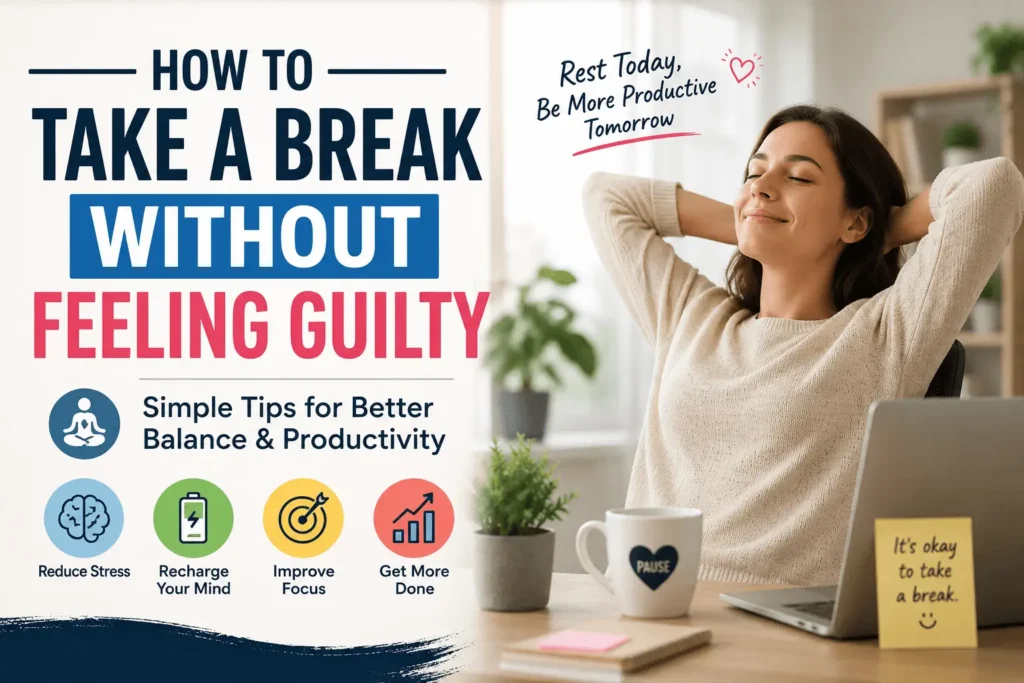
Taking a break without feeling guilty starts with understanding that rest is part of healthy productivity—not the opposite of it. Regular breaks allow your brain to recover, improve focus, reduce stress, and help you stay productive over the long term. Rest isn’t something you have to earn; it’s something your mind and body naturally need.
AI Overview Summary
Many people feel guilty when taking breaks because they associate constant activity with success. In reality, regular rest helps prevent burnout, improves concentration, supports emotional well-being, and increases long-term productivity. Learning to take intentional breaks is an important part of maintaining both mental health and sustainable performance.
Is This You?
You may struggle with rest guilt if you often:
- Feel uncomfortable sitting still.
- Think you should always be doing something productive.
- Check work messages during your breaks.
- Feel guilty relaxing while others seem busy.
- Return from a break feeling anxious instead of refreshed.
If these situations sound familiar, you’re not lazy. You may simply have developed unhealthy beliefs about productivity and rest.
At a Glance
| Best For | Anyone feeling guilty about resting or slowing down |
|---|---|
| Time Needed | 5–15 minutes a day |
| Difficulty | Easy |
| Main Benefit | Better mental recovery and reduced burnout |
| Works Well With | Stress management, healthy routines, mental wellness |
Do you ever feel guilty for taking a break, even when you’re mentally exhausted?
Many people believe they must stay productive all the time. But constantly working without rest can lead to stress, burnout, poor focus, and mental fatigue.
The truth is that taking breaks is not laziness. Healthy breaks help your brain recover, improve concentration, and increase productivity over time.
Learning how to take a break without feeling guilty can help you maintain better balance, protect your mental health, and work more effectively.
In this guide, you’ll learn simple ways to rest without guilt while still staying productive and organized.
Why So Many People Feel Guilty About Rest
Many of us grow up believing that staying busy is the same as being successful.
Over time, this belief can make even short breaks feel uncomfortable. You may worry that you’re falling behind, wasting time, or not doing enough.
The reality is very different.
Your brain isn’t designed to stay focused for hours without recovery. Just as your muscles need rest after exercise, your mind needs regular breaks to think clearly, solve problems, and manage stress.
Changing the way you think about rest is often the first step toward feeling less guilty about taking it.
Why Taking Breaks Is Important
Your brain is not designed to stay focused for endless hours without rest.
Working continuously for long periods can lead to:
- Mental exhaustion
- Reduced creativity
- Poor concentration
- Increased stress
- Lower productivity
Short and intentional breaks help your brain recharge and improve your overall performance. ways to reduce stress every day.
Taking time to rest can actually help you get more done in less time.
The Smart Rest Balance Framework
Instead of viewing work and rest as opposites, think of them as partners.
The Smart Rest Balance Framework helps create a healthier rhythm.
| Step | Focus |
|---|---|
| Work | Give your full attention to important tasks. |
| Pause | Take short, intentional breaks before you feel exhausted. |
| Recover | Choose activities that genuinely help your mind relax. |
| Return | Resume your work with renewed focus and energy. |
Regularly repeating this cycle supports both productivity and well-being.
1. Understand That Rest Is Part of Productivity
One of the biggest reasons people feel guilty about taking breaks is because they think rest means they are wasting time.
In reality, rest is an important part of staying productive.
Even high-performing people take breaks to:
- Recharge mentally
- Reduce stress
- Improve focus
- Avoid burnout
You do not need to earn rest by exhausting yourself first.
2. Stop Comparing Yourself to Others
Social media often makes it seem like everyone else is constantly working and achieving goals without stopping.
But most people only share their productive moments online.
Comparing yourself to unrealistic productivity standards can create unnecessary guilt and pressure.
Focus on your own mental well-being instead of trying to match someone else’s routine.
3. Schedule Small Breaks During the Day
Planned breaks help you stay balanced and focused throughout the day.
Simple breaks can include:
- Stretching for a few minutes
- Drinking water
- Going for a short walk
- Taking deep breaths
- Resting your eyes from screens
Even short breaks can improve energy and concentration.
If you work online often, you may also like our guide on 10 Simple Ways to Stay Focused While Working From Home.
4. Avoid Working Until You Feel Burned Out
Many people wait until they feel completely exhausted before taking a break.
This habit can reduce productivity and increase stress over time.
Instead, try taking short breaks before your energy disappears completely.
Preventing burnout is easier than recovering from it.
boost your productivity without burning out.
5. Give Yourself Permission to Rest
Rest should not feel like a reward that only comes after extreme hard work.
You are allowed to rest because you are human.
Your mental health, focus, and emotional well-being matter just as much as productivity.
Taking care of yourself helps you stay consistent in the long run.
6. Do Something Relaxing During Your Break
Not every break needs to involve scrolling through social media.
Try activities that genuinely help your mind relax, such as:
- Listening to music
- Walking outside
- Reading a book
- Stretching
- Spending time away from screens
Healthy breaks help your brain recover more effectively.
SmartHelpHub Tip
Not every break needs to be long to be helpful.
Even five minutes spent stretching, breathing deeply, or stepping outside without your phone can give your brain an opportunity to recover and return with better focus.
7. Remember That Constant Productivity Is Unrealistic
Nobody can stay productive every minute of the day.
Trying to constantly “do more” can lead to:
- Stress
- Anxiety
- Mental exhaustion
- Reduced motivation
Balance is more sustainable than nonstop productivity.
Learning when to pause can actually improve your long-term performance.
8. Focus on Progress Instead of Perfection
Perfectionism often creates guilt around resting.
You may feel like you should always be doing something productive.
Instead of trying to do everything perfectly:
- Focus on steady progress
- Complete tasks one step at a time
- Accept that rest is normal
- Plan your day effectively
Small consistent actions matter more than constant pressure.
9. Create a Healthier Daily Routine
A balanced routine can help you feel more comfortable taking breaks.
Try including:
- Work time
- Rest time
- Sleep
- Exercise
- Relaxation
- Screen-free moments
Healthy routines support both productivity and mental well-being.
You may also enjoy reading Simple Night Routine for a More Productive Tomorrow.
10. Be Kind to Yourself
Sometimes the pressure to always stay productive comes from being too hard on yourself.
Treat yourself with the same understanding you would offer a friend.
Resting does not make you lazy, unsuccessful, or unmotivated.
Taking breaks is part of maintaining a healthy and balanced life. stop overthinking at night.
Real-Life Example
Megha often worked through lunch because she believed taking breaks meant she wasn’t working hard enough. By the end of each day, she felt mentally exhausted and struggled to stay focused.
Instead of working longer hours, she started taking a short walk every afternoon and stopped checking work messages during her break.
Within a few weeks, she noticed she returned to work feeling more focused, made fewer mistakes, and no longer viewed breaks as wasted time.
Her productivity improved because she gave herself permission to recover.
Quick Self-Assessment
Ask yourself:
- Do I often skip breaks even when I feel tired?
- Do I check my phone or work messages during my breaks?
- Do I feel guilty relaxing on weekends or evenings?
- Do I believe I need to earn rest by working harder first?
- Do I struggle to switch off after work?
If you answered “yes” to several questions, building healthier attitudes toward rest may improve both your well-being and your productivity.
7-Day Healthy Break Challenge
Practice one small habit each day.
Day 1: Take one five-minute break without your phone.
Day 2: Go for a short walk during your lunch break.
Day 3: Stretch or practice deep breathing after focused work.
Day 4: Finish work at your planned time without feeling guilty.
Day 5: Spend ten minutes reading or listening to calming music.
Day 6: Notice how your energy changes after intentional breaks.
Day 7: Choose one break habit you’ll continue next week.
Small moments of recovery help create lasting mental balance.
Final Thoughts
Learning how to take a break without feeling guilty can improve both your productivity and mental health.
Healthy breaks help you:
- Recharge mentally
- Reduce stress
- Improve focus
- Prevent burnout
- Maintain long-term productivity
You do not need to feel guilty for resting.
A balanced routine with proper breaks can help you stay happier, healthier, and more productive over time.
Key Takeaways
- Rest is an important part of long-term productivity.
- Taking breaks helps your brain recover and refocus.
- Feeling guilty about rest is common but can be changed.
- Short, intentional breaks are often more effective than waiting until you’re exhausted.
- A balanced routine supports both productivity and mental well-being.
FAQ
Why do I feel guilty when taking a break?
Many people associate productivity with constant work. Social pressure, perfectionism, and unrealistic expectations can make rest feel unproductive, even though breaks are important for mental health and focus.
Can taking breaks improve productivity?
Yes. Healthy breaks help your brain recover, reduce stress, improve focus, and prevent burnout, which can increase productivity over time.
How often should I take breaks while working?
Short breaks every 25–60 minutes can help maintain concentration and reduce mental fatigue throughout the day.
What are healthy ways to spend a break?
Good break activities include walking, stretching, drinking water, reading, deep breathing, or spending a few minutes away from screens.
Is resting the same as being lazy?
No. Resting is necessary for mental and physical recovery. Taking proper breaks helps you stay balanced, focused, and productive in the long run.
How can I stop feeling pressured to stay productive all the time?
Focus on balance instead of perfection. Setting realistic expectations, limiting comparison with others, and creating healthy routines can reduce productivity pressure.
Why do I feel anxious when I’m not being productive?
Many people associate their self-worth with being productive. Over time, this can make slowing down feel uncomfortable. Learning to separate your value from your output can help reduce this anxiety.
Can taking breaks actually improve my work?
Yes. Research consistently shows that regular breaks can improve concentration, creativity, and decision-making while reducing mental fatigue. Short periods of rest help you return to your work with greater focus.
What’s the difference between resting and procrastinating?
Rest is intentional and helps you recover so you can return to your tasks with more energy. Procrastination is delaying important work without a plan to resume it. The key difference is purpose: rest supports productivity, while procrastination avoids it.