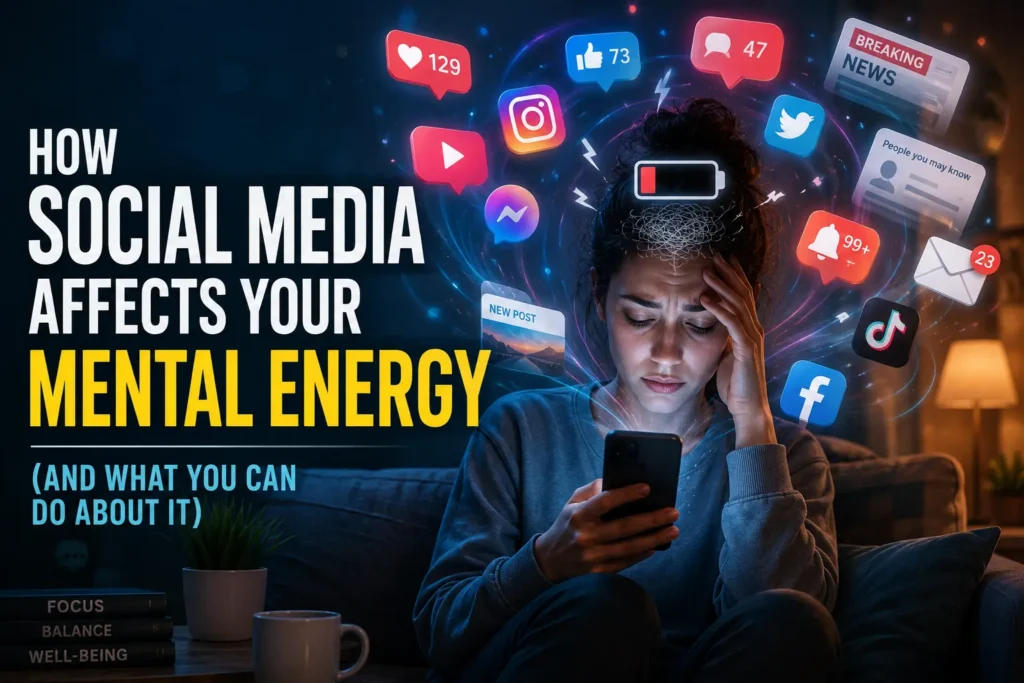
Have you ever spent just a few minutes scrolling through social media, only to realize an hour has passed and you feel mentally exhausted? You’re not alone. Social media has become a normal part of daily life, helping us stay connected, informed, and entertained. However, constant exposure to endless content, notifications, and online interactions can quietly drain our mental energy.
While social media itself isn’t inherently bad, excessive use can leave you feeling distracted, overwhelmed, emotionally drained, and less focused on the things that matter most. Understanding how social media affects your mental energy can help you build healthier digital habits and create a better balance between your online and offline life.
What Is Mental Energy?
Mental energy is your brain’s ability to focus, process information, make decisions, and manage emotions throughout the day.
Just like physical energy, mental energy is limited. Every task you perform, decision you make, and piece of information you process uses some of that energy. When your mental energy becomes depleted, you may feel tired, unfocused, irritable, or overwhelmed.
Many people don’t realize that social media can consume a significant amount of mental energy, even when they’re simply scrolling through content.
How Social Media Drains Your Mental Energy
Information Overload
Every time you open a social media app, you’re exposed to dozens or even hundreds of pieces of information.
You might see:
- News updates
- Personal stories
- Videos
- Advertisements
- Opinions
- Product recommendations
- Messages and notifications
Your brain is constantly processing this information, even when you’re not actively paying attention to it.
This continuous stream of content can contribute to mental fatigue and overwhelm. If you’ve experienced this before, you may find How to Reduce Digital Overload and Feel Less Drained helpful.
Constant Comparisons
Social media often presents carefully curated versions of people’s lives.
You may see:
- Career achievements
- Luxury vacations
- Fitness transformations
- Perfect-looking homes
- Major life milestones
While these posts may seem harmless, constantly comparing yourself to others can create feelings of inadequacy, stress, and emotional exhaustion.
Over time, this can quietly drain your mental energy and affect your overall well-being.
Endless Notifications
Notifications are designed to capture your attention.
Each alert, message, or update interrupts your current focus and encourages you to switch tasks.
Even brief interruptions can make it difficult to maintain concentration and increase mental fatigue throughout the day.
People who frequently check notifications often struggle with focus and productivity. This is why How to Stop Checking Your Phone Every Few Minutes is an important habit-building resource.
Emotional Fatigue
Social media exposes us to a wide range of emotions every day.
Within a few minutes of scrolling, you might encounter:
- Positive news
- Negative headlines
- Personal struggles
- Political debates
- Emotional stories
Constantly shifting between different emotional experiences can leave you feeling mentally drained, even if you’re not aware of it.
This type of emotional overload is often connected to the issues discussed in Why You Feel Emotionally Overstimulated All the Time.
Decision Fatigue
Every scroll requires your brain to make decisions.
Should you:
- Watch this video?
- Read this post?
- Respond to this comment?
- Open that notification?
- Follow this account?
While each choice may seem small, hundreds of tiny decisions throughout the day can gradually deplete mental energy.
Signs Social Media Is Affecting Your Mental Energy
You Feel Mentally Tired After Scrolling
One of the most common signs is feeling drained after spending time online.
Even if you haven’t done any physical work, your mind may feel exhausted from processing information.
This experience is similar to what many people describe in Why Your Brain Feels Tired Even When You Didn’t Do Much.
You Struggle to Focus
If you find it difficult to concentrate on work, study, or everyday tasks, excessive social media use may be contributing to the problem.
Frequent attention switching makes it harder for your brain to focus deeply.
You Feel Anxious When You’re Offline
Do you feel uncomfortable when you haven’t checked social media for a while?
This can be a sign that your digital habits are becoming unhealthy.
You Constantly Reach for Your Phone
Many people automatically check social media whenever they feel bored, stressed, or uncertain.
Over time, this behavior becomes an unconscious habit.
You Feel Overwhelmed More Often
Too much information and stimulation can leave your mind feeling cluttered and overloaded.
If this sounds familiar, you may benefit from reading How to Reduce Mental Clutter and Feel More Clear-Headed.
How to Protect Your Mental Energy
Turn Off Non-Essential Notifications
Most notifications don’t require immediate attention.
Disabling unnecessary alerts can reduce distractions and help you focus on what matters.
Set Social Media Time Limits
Many smartphones allow you to track and limit app usage.
Setting boundaries can help prevent endless scrolling and reduce mental fatigue.
Create Phone-Free Periods
Choose specific times during the day when you intentionally avoid social media.
Examples include:
- During meals
- Before bed
- While working
- During exercise
These breaks allow your mind to recover from constant stimulation.
Follow Fewer Accounts
The more content you consume, the more information your brain must process.
Consider unfollowing accounts that don’t provide value, inspiration, or useful information.
Spend More Time Offline
Replace some social media time with activities such as:
- Walking
- Reading
- Journaling
- Exercising
- Spending time with family and friends
These activities often leave you feeling energized rather than drained.
Benefits of Reducing Social Media Use
Many people notice significant improvements when they create healthier digital habits.
Benefits may include:
- Better focus
- Increased productivity
- Reduced stress
- Improved sleep quality
- Better emotional balance
- Greater mental clarity
You may also discover that you have more time and energy for meaningful activities.
For people considering a broader reset, Signs You Need a Digital Detox provides practical guidance for creating healthier boundaries with technology.
Key Takeaways
Social media can be a useful tool, but excessive use can quietly consume your mental energy.
If you often feel:
- Mentally exhausted
- Easily distracted
- Emotionally overwhelmed
- Constantly attached to your phone
It may be time to reevaluate your digital habits.
Small changes such as reducing notifications, limiting screen time, and taking regular breaks can make a significant difference in your focus, mood, and overall well-being.
The goal isn’t to eliminate social media completely. The goal is to use it intentionally so it supports your life rather than draining your mental energy.
Frequently Asked Questions
Can social media really make you feel mentally exhausted?
Yes. Constant exposure to information, notifications, and emotional content can contribute to mental fatigue and reduced focus.
How much social media is too much?
There is no universal answer, but if social media is affecting your productivity, mood, sleep, or relationships, it may be worth reducing your usage.
Does social media affect concentration?
Yes. Frequent interruptions and constant content consumption can make it harder to focus on tasks for extended periods.
What are the signs of social media overload?
Common signs include mental fatigue, anxiety, difficulty focusing, excessive phone checking, and feeling overwhelmed by information.
How can I create healthier social media habits?
Start by limiting notifications, setting app usage boundaries, creating phone-free periods, and spending more time on offline activities.