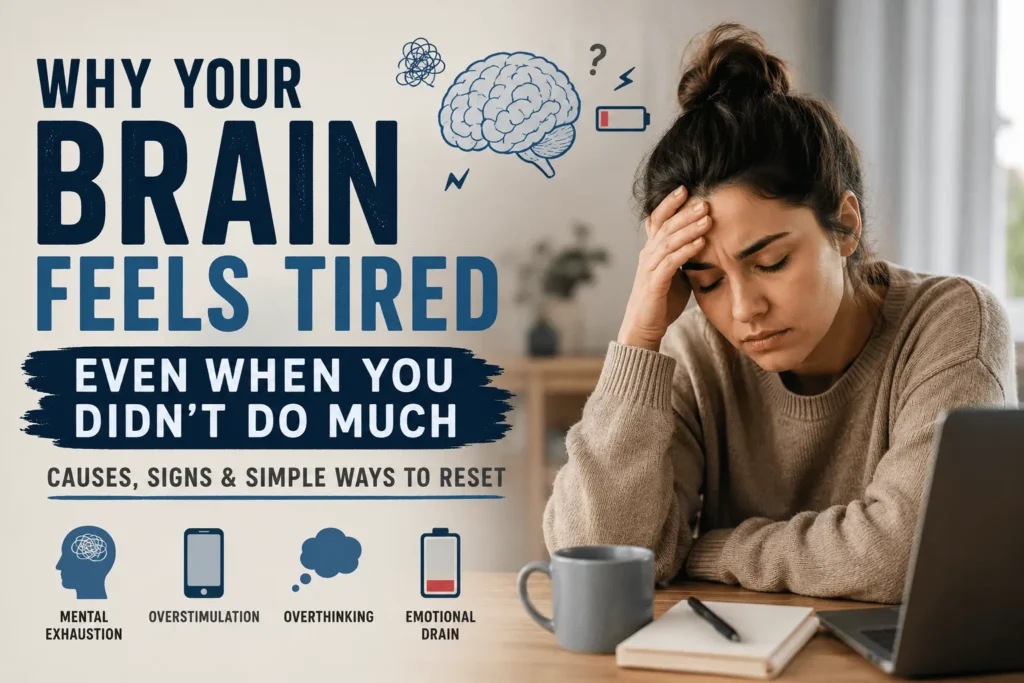
Have you ever reached the end of the day feeling completely drained… even though you barely got anything done?
Maybe you answered a few messages, scrolled through your phone, thought about your to-do list, or handled a couple of small tasks. Nothing physically exhausting. Yet somehow your brain still feels heavy, foggy, and tired.
If that sounds familiar, you’re not lazy and you’re probably not imagining it.
Mental exhaustion doesn’t always come from doing too much physically. Sometimes your brain becomes tired from constant stimulation, emotional stress, decision-making, overthinking, or simply never getting a real mental break.
Modern life keeps our minds “on” almost all the time. Even when we look like we’re resting, our brains are often still working in the background.
The good news is that once you understand what’s causing this type of mental fatigue, it becomes much easier to manage.
Your Brain Can Get Overloaded Without Physical Activity
Many people think exhaustion only comes from being busy or productive. But your brain uses energy differently than your body.
Even small mental tasks can slowly drain your attention and emotional energy throughout the day.
Things like:
- Constant notifications
- Switching between apps
- Worrying about unfinished tasks
- Overthinking conversations
- Making endless small decisions
- Comparing yourself online
- Absorbing too much information
These may seem harmless individually, but together they create mental overload.
This is similar to what we discussed in our article on reducing digital overload and mental stimulation. Constant input can quietly exhaust your brain without you realizing it.
Mental Fatigue Often Builds Quietly
One reason this type of exhaustion feels confusing is because it builds slowly.
You may not notice it immediately. But after days or weeks of mental clutter, your brain starts showing signs that it needs rest.
You might experience:
- Brain fog
- Trouble concentrating
- Low motivation
- Feeling emotionally sensitive
- Irritability
- Difficulty starting simple tasks
- Feeling overwhelmed by small responsibilities
Sometimes people assume they need to “try harder” when what they actually need is mental recovery.
Overthinking Uses More Energy Than You Realize
Your brain spends energy even when your body is resting.
If your mind constantly replays situations, worries about the future, or analyzes every decision, it can create exhaustion similar to working for hours.
Overthinking keeps your nervous system active. Your brain struggles to fully relax because it stays stuck in problem-solving mode.
This is especially common for people who:
- Feel responsible for everything
- Have high expectations for themselves
- Struggle to slow down mentally
- Constantly think about unfinished tasks
Mental energy drains faster when your brain never feels “done.”
Too Much Information Can Exhaust Your Brain
Your brain was not designed to process endless information all day long.
Today we consume:
- Social media updates
- News alerts
- Videos
- Emails
- Messages
- Productivity advice
- Notifications
- Opinions from hundreds of people online
Even when this content seems entertaining or harmless, your brain still has to process it.
This constant intake can create overstimulation, which often leads to mental fatigue, emotional exhaustion, and difficulty focusing.
That’s why many people feel strangely tired after spending hours online, even if they were technically “relaxing.”
Emotional Stress Is Mentally Draining
Mental exhaustion is not always caused by workload.
Emotional pressure can tire your brain just as much.
Stress from relationships, uncertainty, finances, work pressure, or personal expectations can quietly sit in the background all day.
Even if you’re not actively thinking about those problems every second, your brain still carries that emotional weight.
This invisible stress can make simple daily tasks feel harder than usual.
Decision Fatigue Makes Everything Feel Harder
Your brain makes thousands of small decisions every day.
What to eat.
What to reply.
What to prioritize.
What to ignore.
What to buy.
What to watch.
What to finish first.
Over time, constant decision-making drains mental energy.
This is called decision fatigue, and it can make your brain feel exhausted even when you haven’t done anything physically demanding.
Small decisions may not feel important individually, but repeated mental effort adds up quickly.
Your Brain May Need Rest, Not More Productivity
When people feel mentally tired, they often try to fix it by:
- Forcing themselves to work harder
- Consuming more productivity content
- Creating bigger to-do lists
- Feeling guilty for resting
But sometimes the solution is not better productivity.
Sometimes your brain simply needs recovery.
Real mental rest is different from passive scrolling or multitasking.
Your brain benefits more from:
- Quiet moments
- Reduced stimulation
- Slower routines
- Better sleep
- Time away from screens
- Gentle movement
- Calm environments
Giving your mind space to slow down can improve focus much more than pushing yourself harder.
Simple Ways to Feel Mentally Lighter Again
You do not need a perfect routine to reduce mental exhaustion.
Small changes can make a noticeable difference over time.
Reduce Mental Input for a While
Try spending part of your day without constant stimulation.
That may mean:
- Turning off notifications
- Taking breaks from social media
- Listening to less background noise
- Avoiding information overload
Your brain needs quieter moments to recover.
Stop Treating Rest Like Laziness
Rest is not wasted time.
Mental recovery helps your brain function better, think clearly, and regulate emotions more effectively.
Without recovery, even small tasks begin to feel overwhelming.
Focus on Fewer Things at Once
Trying to mentally juggle too many responsibilities creates cognitive overload.
Choose fewer priorities each day instead of trying to optimize every hour.
A calmer mind usually performs better than an overloaded one.
Create More “Empty Space” in Your Day
Your brain needs moments where nothing is demanding your attention.
Simple quiet activities help:
- Walking without your phone
- Sitting outside
- Stretching
- Journaling
- Deep breathing
- Listening to calm music
These small pauses help your nervous system reset.
Improve Your Sleep Quality
Mental fatigue becomes worse when your brain never fully recharges overnight.
A calming nighttime routine, less screen exposure before bed, and consistent sleep habits can make a major difference.
You may also enjoy reading our guide on building healthier night routines for better mental recovery and creating a weekend reset routine to feel more organized and refreshed.
Feeling Mentally Tired Does Not Mean You’re Failing
Many people silently struggle with mental exhaustion because it’s harder to measure than physical tiredness.
You may look “fine” externally while feeling mentally drained internally.
That does not mean you are lazy, weak, or unproductive.
Your brain is constantly processing emotions, information, stress, decisions, and stimulation — often more than you realize.
Sometimes exhaustion is simply a signal that your mind needs less pressure and more recovery.
Learning how to slow down mentally is becoming one of the most important forms of self-care in modern life.
FAQ
Why do I feel mentally tired even after doing nothing?
Mental exhaustion can happen from emotional stress, overthinking, constant stimulation, decision fatigue, or information overload — even without physical activity.
Can scrolling on my phone make my brain tired?
Yes. Constant scrolling and digital stimulation force your brain to process large amounts of information, which can contribute to mental fatigue and overstimulation.
What are signs of mental exhaustion?
Common signs include brain fog, irritability, low motivation, difficulty concentrating, emotional sensitivity, and feeling overwhelmed by small tasks.
How can I recover from mental fatigue?
Reducing stimulation, improving sleep, taking screen breaks, slowing down your routine, and allowing proper mental rest can help your brain recover over time.
Is mental exhaustion the same as burnout?
Not always. Mental exhaustion can happen before full burnout develops. Burnout is usually more severe and long-term.