Quick Answer
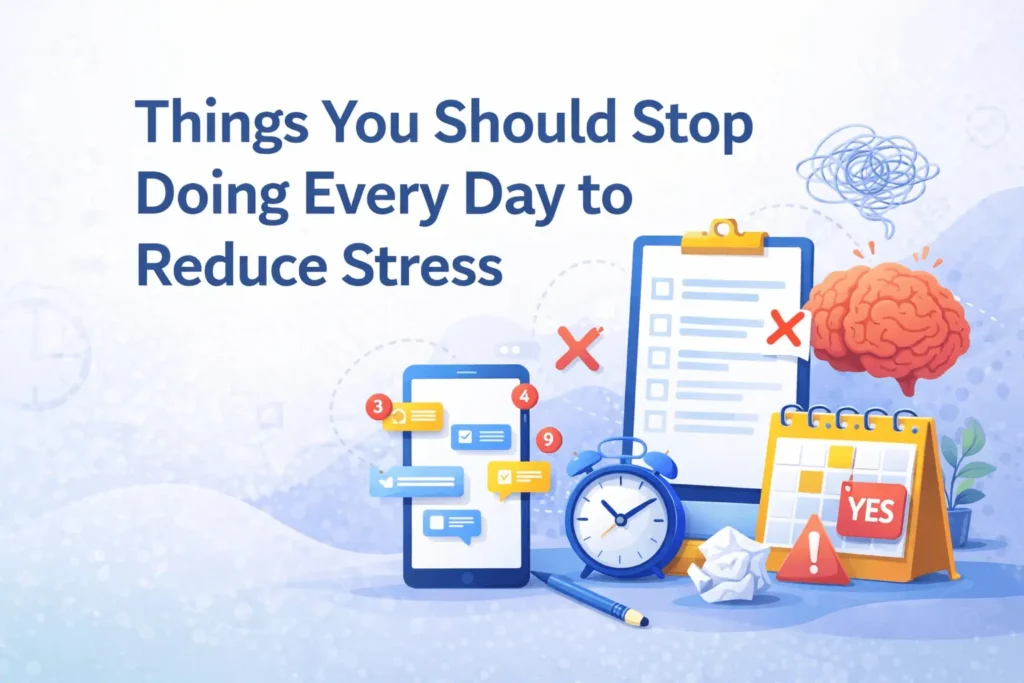
Reducing daily stress doesn’t always require major lifestyle changes. Often, the biggest improvements come from removing small habits that quietly increase mental overload. Limiting distractions, planning your day, taking regular breaks, simplifying decisions, and creating healthy routines can help you feel calmer, more focused, and better able to handle everyday challenges.
AI Overview Summary
Daily stress often builds because of small habits that overload your mind throughout the day. Constant phone checking, multitasking, overthinking, and poor planning gradually increase mental fatigue. Replacing these habits with simple routines, focused work, and regular breaks can reduce stress and improve your overall well-being.
Is This You?
Do any of these sound familiar?
- You feel mentally exhausted before the day is over.
- Small problems seem much bigger than they should.
- You constantly switch between tasks without finishing them.
- You struggle to relax, even during your free time.
- Your mind feels busy from the moment you wake up.
If so, your daily habits—not just your responsibilities—may be contributing to your stress.
The good news is that changing a few small routines can make everyday life feel much calmer.
At a Glance
| Best For | Anyone experiencing everyday stress or mental overload |
|---|---|
| Time Needed | 5–10 minutes to begin |
| Difficulty | Easy |
| Main Benefit | Lower stress and better mental clarity |
| Works Well With | Morning routines, digital wellness, organization habits |
Why Small Habits Create Big Stress
Many people believe stress is caused only by major life events such as work deadlines, financial pressure, or family responsibilities.
While those situations certainly matter, everyday stress often builds much more gradually.
Checking your phone every few minutes, trying to multitask, saying yes to too many commitments, or constantly overthinking small decisions may seem harmless. However, these habits repeatedly demand your attention and slowly drain your mental energy.
Over time, these small interruptions create constant mental overload, making it harder to stay calm, focused, and productive.
Fortunately, changing just a few of these habits can make a noticeable difference.
The Smart Stress Reset Framework
Reducing stress doesn’t require changing everything at once.
The Smart Stress Reset Framework helps you focus on the habits that have the biggest impact.
| Step | Focus |
|---|---|
| Notice | Identify one habit increasing your stress. |
| Replace | Choose one healthier alternative. |
| Repeat | Practice the new habit consistently. |
| Review | Reflect on how your stress levels change over time. |
Rather than trying to fix everything overnight, improving one habit at a time creates lasting change that’s much easier to maintain.
1. Stop Checking Your Phone Constantly
Every notification interrupts your focus and increases mental overload.
When you keep checking your phone:
- Your brain never fully rests
- Your attention gets fragmented
- Stress levels increase
Try this instead:
- Check your phone at fixed times
- Turn off unnecessary notifications
2. Stop Starting Your Day Without a Plan
Waking up and reacting to everything creates chaos.
Without a plan:
- You feel lost
- You waste time
- You get overwhelmed easily
Instead:
- Decide your top 3 tasks
- Start your day with purpose
👉 You can also read: How to Plan Your Day Effectively Without Feeling Stressed
3. Stop Multitasking
Multitasking feels productive but actually increases stress.
Why?
- Your brain keeps switching focus
- You make more mistakes
- Tasks take longer
Focus on one task at a time for better results and less stress.
4. Stop Saying Yes to Everything
Trying to do everything for everyone leads to burnout.
If you always say yes:
- Your schedule gets overloaded
- You lose personal time
- Stress increases
Learn to:
- Set boundaries
- Say no when needed
5. Stop Overthinking Small Decisions
Overthinking drains your mental energy.
Examples:
- What to wear
- What to eat
- Minor work decisions
Simplify your choices:
- Create routines
- Make quick decisions
SmartHelpHub Tip
Whenever you catch yourself overthinking, ask:
“Will this decision still matter next week?”
If the answer is no, make the best reasonable choice and move forward.
Saving your mental energy for important decisions is one of the simplest ways to reduce daily stress.
6. Stop Keeping Everything in Your Head
Trying to remember everything increases stress.
Instead:
- Write things down
- Use a simple to-do list
- Organize your thoughts
👉 Related: How to Create a Daily To-Do List That You’ll Actually Follow
7. Stop Comparing Yourself to Others
Constant comparison creates unnecessary pressure.
Social media makes it worse by showing only highlights of others’ lives.
Remember:
- Everyone moves at their own pace
- Your journey is different
Focus on your progress instead.
8. Stop Ignoring Breaks
Working nonstop might feel productive, but it increases stress.
Your brain needs breaks to reset.
Try:
- Short walks
- Deep breathing
- Quick mental breaks
Even 5 minutes can help.
9. Stop Trying to Be Perfect
Perfectionism creates pressure and delays progress.
Instead:
- Aim for progress
- Accept mistakes
- Keep moving forward
10. Stop Ending Your Day Without Resetting
A messy end to your day leads to a stressful start tomorrow.
Simple reset:
- Clean your workspace
- Plan next day
- Clear your mind
Real-Life Example
Neha used to finish every day feeling mentally exhausted, even on days when she wasn’t especially busy.
Instead of trying to completely change her lifestyle, she focused on three small habits:
- Turning off unnecessary phone notifications.
- Planning tomorrow before leaving work.
- Taking a five-minute break every afternoon.
After several weeks, she noticed she felt calmer, found it easier to focus, and ended most days with much less mental fatigue.
The biggest improvement came from changing small daily habits—not from doing more.
Bonus Tip: Replace Bad Habits Slowly
Don’t try to fix everything at once.
Pick 2–3 habits to stop and replace them with better ones gradually.
Small changes create long-term results.
7-Day Stress Reset Challenge
Rather than changing every habit today, improve one small habit each day.
Day 1: Reduce unnecessary phone notifications.
Day 2: Plan your top three priorities.
Day 3: Take one intentional five-minute break.
Day 4: Stop multitasking for one important task.
Day 5: Say no to one unnecessary commitment.
Day 6: Write tomorrow’s plan before bed.
Day 7: Reflect on which habit made the biggest difference.
Small improvements repeated consistently lead to lasting reductions in everyday stress.
Key Takeaways
Daily stress often comes from small habits rather than major events. Reducing distractions helps lower mental overload. Focusing on one task at a time reduces unnecessary pressure. Healthy routines make stressful days easier to manage. Progress is more effective than perfection.
Final Thoughts
Reducing stress isn’t about doing more—it’s about removing what doesn’t help you.
By stopping these daily habits, you can:
- Feel calmer
- Stay more focused
- Improve your overall well-being
Start small, stay consistent, and your days will feel lighter and more manageable.
❓ Frequently Asked Questions
1. What are the best daily habits to reduce stress?
The best daily habits to reduce stress include regular exercise, mindfulness or meditation, proper sleep, healthy eating, and taking breaks. These habits help calm the mind and improve overall well-being.
2. How can I reduce stress naturally every day?
You can reduce stress naturally by staying active, practicing deep breathing, limiting screen time, and spending time with loved ones. Small daily changes can significantly improve mental health.
3. How long does it take to reduce stress with daily habits?
You may start feeling better within a few days, but consistent daily habits can show noticeable long-term improvements in stress levels within a few weeks.
4. Does exercise help reduce stress?
Yes, exercise helps reduce stress by releasing endorphins, which improve mood and reduce anxiety. Even a short walk or light workout can make a big difference.
5. What should I avoid to reduce stress?
To reduce stress, avoid excessive screen time, caffeine, unhealthy eating, and overworking. These habits can increase anxiety and negatively affect your mental health.
6. Can daily habits improve mental health?
Yes, healthy daily habits like good sleep, exercise, and mindfulness can improve mental health by reducing stress, improving focus, and increasing emotional stability.
7. Is sleep important for stress management?
Yes, getting 7–9 hours of quality sleep is essential for stress management, as it helps your body and mind recover and function properly.
8. Can changing small habits really reduce stress?
Yes. Small habits influence how much mental energy you use throughout the day. Reducing unnecessary distractions, creating simple routines, and taking regular breaks can gradually lower everyday stress and help you feel more in control, even when life remains busy.