
Mental Load Assessment: What Type of Mental Load Are You Carrying?
Feeling mentally drained but can’t point to why? Mental load can come from several different sources, including sensory, decisional, emotional, and informational load. Each type can affect you differently, so understanding where your mental load is coming from can help you choose more practical ways to manage it.
This free mental load assessment takes about 3 minutes and scores you across all four areas. Your results highlight the areas with the highest scores and suggest practical resources based on your responses.
Mental Load Assessment
Mentally drained but not sure why? Find out which type of mental load may be affecting you most — and explore practical ways to manage it.
- ⏱ Takes less than 3 minutes
- 🧠 Scores across 4 types of mental load
- 🎯 Personalised recovery plan matched to your results
How true is this for you?
Your mental load score
Load by type
Your responses are processed directly within your browser and are not stored on our servers. No personal information is required to use this assessment.
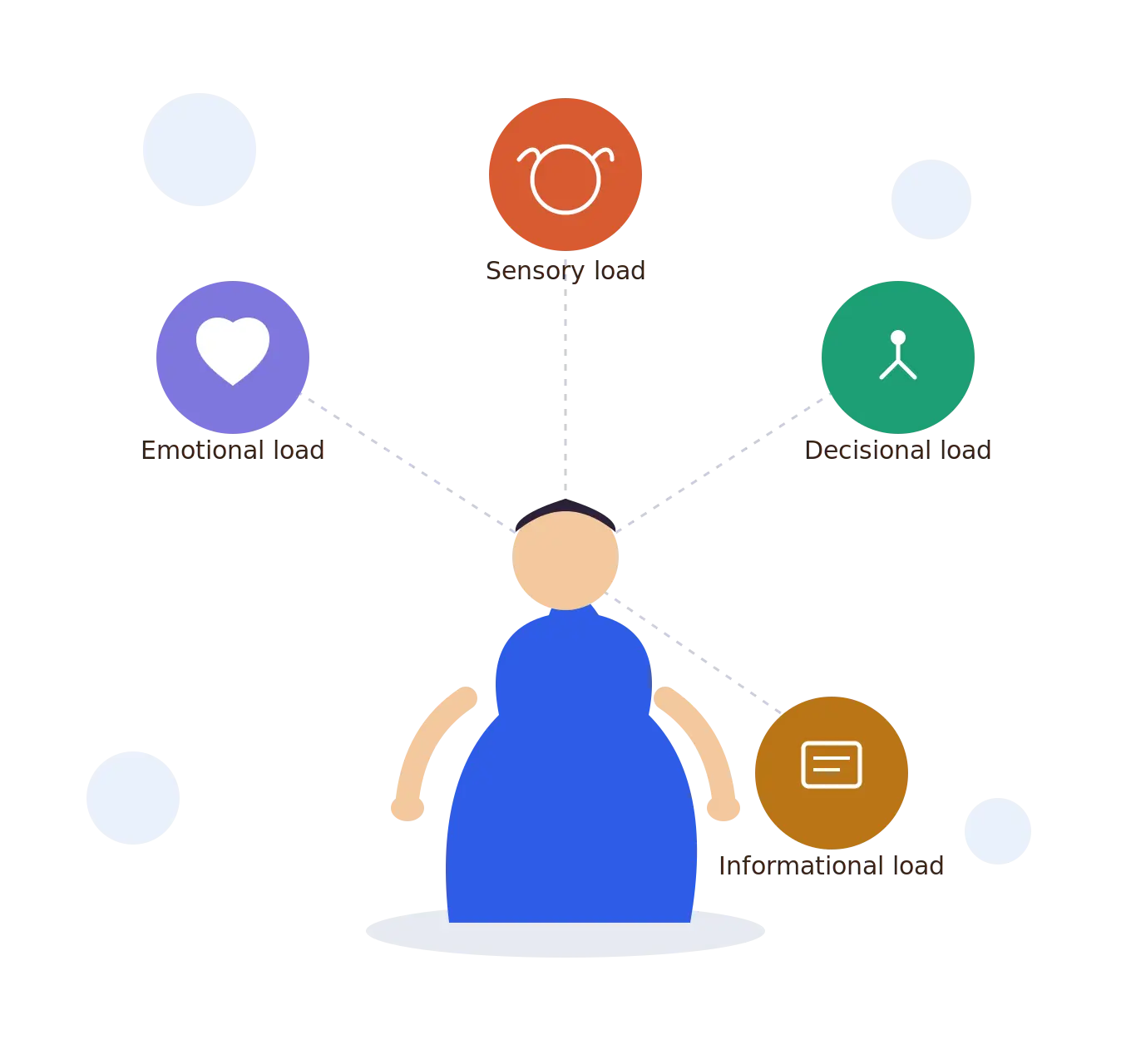
What Are the 4 Types of Mental Load?
Your score is based on your responses across four types of mental load. Each type contributes to your overall score and helps highlight which areas may need more attention right now.
1. Sensory load
2. Decisional load
3. Emotional load
4. Informational load
Most days involve a mix of all four, which is why generic advice doesn’t always help. Understanding which type of mental load is affecting you most can make it easier to choose a more relevant next step.
How to Use Your Mental Load Assessment Results
Frequently Asked Questions
How accurate is this assessment?
What if I score high across all four categories?
How is this different from the Life Balance Checkup?
Can I retake this later?
Disclaimer:
Mental Load Assessment tool is provided for educational and informational purposes only. It is not intended to diagnose, treat, cure, or prevent any medical, psychological, or mental health condition. If you are experiencing significant emotional distress or mental health concerns, please consult a qualified healthcare professional.