Quick Answer
Self-discipline is the ability to make choices based on your long-term goals rather than your temporary feelings. You can strengthen self-discipline by starting with small habits, reducing distractions, creating simple routines, and taking consistent action even on days when you don’t feel motivated.
AI Overview Summary
Building self-discipline doesn’t require becoming perfect overnight. It develops through small daily actions repeated consistently over time. Creating routines, setting realistic goals, limiting distractions, and practicing follow-through help strengthen self-discipline and make it easier to stay committed to your goals.
Is This You?
Do any of these situations sound familiar?
- You know what you should do but struggle to get started.
- You rely on motivation but lose momentum after a few days.
- You often choose what’s easy instead of what’s important.
- You give up quickly when progress feels slow.
- You want more consistency but aren’t sure how to build it.
If so, you don’t necessarily lack discipline—you may simply need a system that helps you make better choices more consistently.
At a Glance
| Best For | Students, professionals, entrepreneurs, anyone building better habits |
|---|---|
| Time Needed | 10–15 minutes each day |
| Difficulty | Moderate |
| Main Benefit | Stronger habits and greater consistency |
| Works Well With | Goal setting, routines, and habit tracking |
Introduction
Do you struggle to stay disciplined even when you know what you should do? You’re not alone. Many people set goals but fail to follow through because they lack self-discipline.
The truth is, self-discipline is not something you’re born with—it’s a skill you can build with simple daily habits.
👉 In this guide, you’ll learn how to build self-discipline in daily life using practical and easy strategies.
Table of Contents
- What Is Self-Discipline?
- Why Self-Discipline Is Important
- How to Build Self-Discipline
- Common Mistakes
- Pro Tips
- FAQs
What Is Self-Discipline?
👉 Self-discipline is the ability to control your actions, stay focused, and do what needs to be done—even when you don’t feel like it.
It helps you stay consistent, avoid distractions, and achieve your goals over time.
Why Self-Discipline Is More Important Than Motivation
Motivation is helpful, but it naturally changes from day to day. Some mornings you feel energized, while on others you may not feel like doing anything at all.
Self-discipline helps you keep moving even when motivation is low. Instead of depending on how you feel in the moment, you make decisions based on what supports your long-term goals.
Over time, these small, disciplined choices become habits, making it easier to stay consistent without constantly relying on willpower.
The Smart Discipline Ladder
Self-discipline grows one step at a time.
Instead of trying to become highly disciplined overnight, focus on moving up this simple ladder.
| Step | Focus |
|---|---|
| Choose | Decide on one meaningful habit. |
| Repeat | Practice it consistently every day. |
| Strengthen | Continue even when motivation is low. |
| Grow | Add another habit only after the first feels natural. |
Building discipline gradually is far more sustainable than making dramatic changes all at once.
How to Build Self-Discipline in Daily Life
1. Start Small
Don’t try to change everything at once.
👉 Focus on one small habit at a time.
2. Create a Daily Plan
Planning reduces confusion and improves discipline.
👉 Learn how to plan your day effectively without stress
3. Build a Simple Routine
Routine makes discipline easier.
👉 Follow a simple morning routine that actually works
4. Remove Distractions
Distractions destroy discipline.
👉 Learn how to stay focused while working from home
5. Set Clear Goals
Clear goals give direction.
👉 Use a daily to-do list system to stay organized
6. Stay Consistent
Consistency builds discipline over time.
👉 Read how to stay consistent with your goals
7. Avoid Bad Habits
Bad habits weaken discipline.
👉 Fix bad habits that destroy productivity
8. Track Your Progress
Tracking helps you stay accountable.
- Use a checklist
- Track daily habits
SmartHelpHub Tip
When you don’t feel like completing a habit, promise yourself you’ll only do the smallest possible version.
Read one page instead of an entire chapter.
Exercise for five minutes instead of thirty.
Often, getting started is enough to build momentum.
Common Mistakes to Avoid
- Relying only on motivation
- Trying to do too much
- Ignoring routines
- Giving up too quickly
Pro Tips for Better Discipline
- Start your day with one important task
- Keep your routine simple
- Focus on progress, not perfection
- Stay patient
Real-Life Example
Rohan wanted to wake up earlier, exercise regularly, and spend more time learning new skills. Every few weeks he would feel highly motivated, but the excitement quickly faded.
Instead of relying on motivation, he focused on one simple habit: completing a ten-minute workout every morning, even on busy days.
Once that habit became part of his routine, he gradually added other positive habits.
Within a few months, he noticed he was no longer depending on motivation. His daily actions had become automatic because he practiced them consistently.
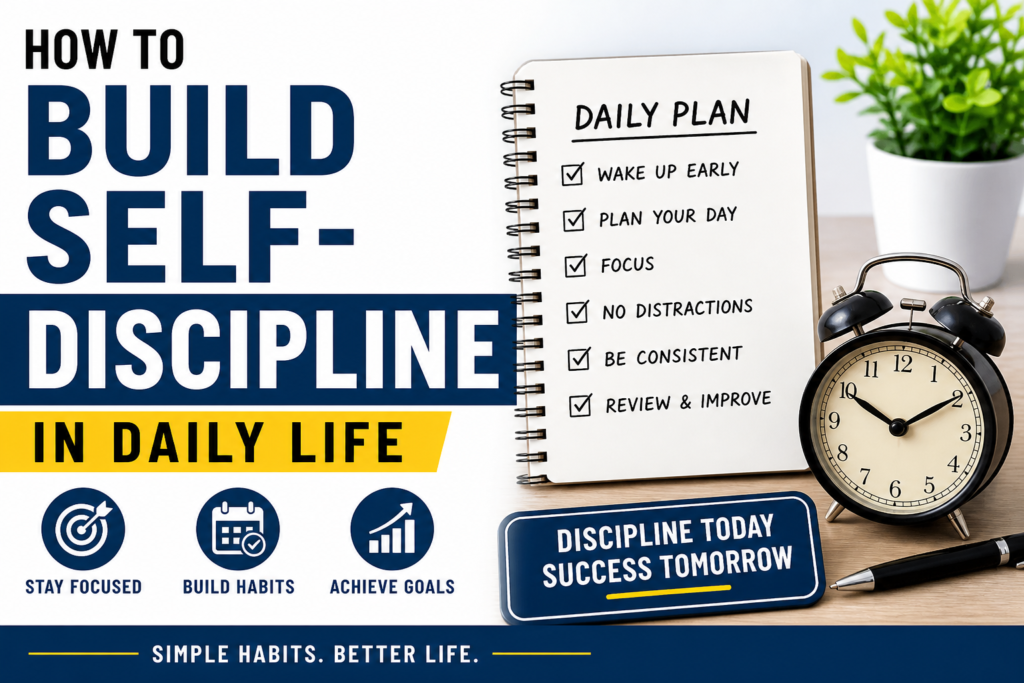
Example Daily Discipline Routine
- Morning routine
- Plan top 3 tasks
- Focus work session
- Review your day
FAQs
How can I build self-discipline in daily life?
Start small, build a routine, and stay consistent.
Why do I lack self-discipline?
It usually happens due to distractions, lack of routine, or unclear goals.
How long does it take to build discipline?
It can take a few weeks to months depending on consistency.
Is discipline more important than motivation?
Yes, discipline keeps you going even when motivation fades.
Can self-discipline be learned?
Yes. Self-discipline is a skill that improves through practice. By repeating small positive habits consistently, you gradually strengthen your ability to make choices that support your long-term goals.
What’s the difference between self-discipline and willpower?
Willpower is the short-term ability to resist temptation, while self-discipline is the long-term habit of making consistent choices that align with your goals. Self-discipline relies more on routines and habits than on constant mental effort.
What should I do when I lose discipline?
Instead of trying to restart everything, return to one simple habit that feels manageable. Rebuilding momentum with a small action is often more effective than waiting until you feel fully motivated again.
21-Day Self-Discipline Challenge
Strengthen your self-discipline by practicing one small action every day.
Week 1: Complete one simple habit without missing two days in a row.
Week 2: Reduce one distraction that regularly interrupts your progress.
Week 3: Continue your habit even on days when motivation feels low.
The goal isn’t perfection. The goal is proving to yourself that you can keep showing up consistently.
Key Takeaways
Self-discipline is built through repeated action, not natural talent. Small habits are easier to maintain than dramatic changes. Motivation fades, but routines create consistency. Progress matters more than perfection. Strong discipline develops gradually over time.
Conclusion
Self-discipline is the key to achieving your goals and improving your daily life. It doesn’t require big changes—just small, consistent actions.
Start today, stay consistent, and build habits that support your goals.