Have you ever reached the end of a busy day and still felt like you didn’t accomplish enough?
Maybe your to-do list keeps growing, your responsibilities never seem to end, and no matter how hard you work, you always feel like you’re falling behind.
If this sounds familiar, you’re not alone.
Many people today feel trapped in a cycle of constantly trying to catch up. Between work, family responsibilities, personal goals, social commitments, and endless digital distractions, it’s easy to feel like everyone else is moving ahead while you’re struggling to keep pace.
The good news is that feeling behind isn’t always a reflection of reality. In many cases, it’s the result of unrealistic expectations, comparison, and trying to do too much at once.
Let’s explore why this happens and what you can do to break free from the feeling of constantly being behind.
Quick Answer
If you constantly feel behind in life, focus on your priorities, simplify your commitments, stop comparing yourself to others, and recognize the progress you’re already making. Small changes in mindset and daily habits can help you feel more in control and less overwhelmed.
Why So Many People Feel Behind
Modern life creates constant pressure.
Every day we’re exposed to:
- Social media success stories
- Productivity advice
- News updates
- Career achievements
- Financial milestones
- Personal development goals
As a result, many people feel like they’re not doing enough.
The problem is that we’re often comparing our real lives to carefully curated versions of other people’s lives.
This creates the illusion that everyone else has everything figured out while we’re struggling to keep up.
Signs You’re Stuck in the “Always Behind” Mindset
You may be experiencing this mindset if:
- You rarely feel satisfied with your progress
- You constantly think about unfinished tasks
- You feel guilty when resting
- Your to-do list feels endless
- You compare your progress to others
- You often feel overwhelmed
- You struggle to enjoy accomplishments
If several of these sound familiar, it may be time to reassess your expectations and priorities.
Common Reasons You Feel Like You’re Falling Behind
1. You’re Comparing Yourself to Others
One of the biggest reasons people feel behind is comparison.
Social media makes it easy to see other people’s:
- Promotions
- Vacations
- New homes
- Business successes
- Fitness achievements
What we don’t see are their challenges, failures, setbacks, and struggles.
Comparing your entire life to someone else’s highlight reel will almost always leave you feeling inadequate.
2. You’re Trying to Do Too Much
Many people overload themselves with responsibilities.
They try to:
- Excel at work
- Maintain a perfect home
- Exercise regularly
- Build side projects
- Stay socially active
- Learn new skills
While these goals are valuable, trying to do everything at once often leads to burnout.
If your schedule feels overwhelming, you may benefit from How to Simplify Your Life When Everything Feels Busy.
3. Your Expectations Are Unrealistic
Sometimes the problem isn’t a lack of progress.
The problem is expecting too much from yourself.
Many people create daily task lists that would realistically require several days to complete.
When expectations are unrealistic, disappointment becomes inevitable.
4. You Have Too Many Decisions to Make
Decision fatigue can quietly drain your energy and make even simple tasks feel difficult.
Every decision requires mental effort.
Over time, decision overload can make you feel stuck and unproductive.
If this sounds familiar, read How to Reduce Decision Fatigue in Daily Life.
5. You’re Constantly Consuming Information
Many people spend hours consuming content about productivity, success, and self-improvement.
While learning is valuable, too much information can create pressure and overwhelm.
You may feel like you should be doing more simply because you’re constantly seeing new ideas and advice.
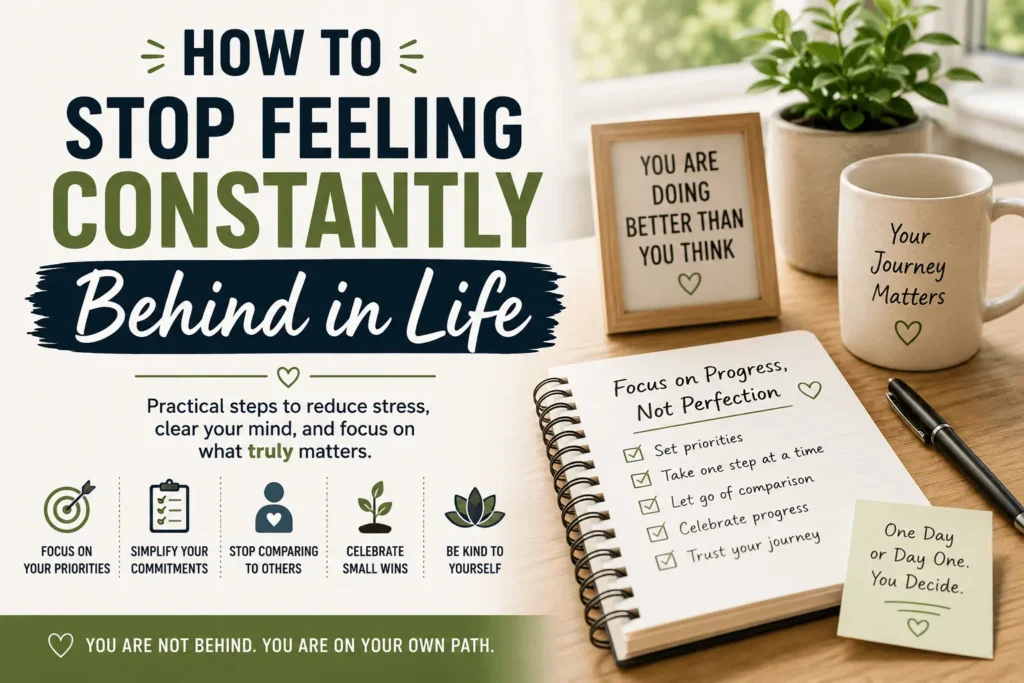
How to Stop Feeling Constantly Behind in Life
Focus on Progress Instead of Perfection
Perfection is impossible.
Instead of asking:
“Am I where I should be?”
Ask:
“Am I making progress?”
Small improvements made consistently are often more valuable than dramatic changes.
Identify Your Top Priorities
Not everything deserves equal attention.
Ask yourself:
- What matters most right now?
- What goals truly align with my values?
- What can wait?
When you focus on a few important priorities, life becomes more manageable.
You may also find How to Plan Your Day Effectively Without Feeling Stressed helpful for creating realistic daily expectations.
Simplify Your Commitments
Every commitment requires time and energy.
Review your schedule and consider:
- Which commitments are essential?
- Which can be postponed?
- Which can be delegated?
- Which can be removed completely?
Reducing unnecessary obligations can create more space and reduce stress.
Stop Measuring Your Life Against Others
Everyone moves at a different pace.
Someone else’s timeline has nothing to do with yours.
Your goals, circumstances, responsibilities, and opportunities are unique.
Focus on your own journey instead of trying to keep up with someone else’s.
Celebrate Small Wins
Many people immediately move to the next task without recognizing what they’ve already accomplished.
Take time to acknowledge:
- Tasks completed
- Goals achieved
- Habits maintained
- Challenges overcome
Celebrating small wins helps build momentum and confidence.
Organize Your Responsibilities
When everything feels urgent, it’s difficult to know where to start.
Creating simple systems can reduce stress and improve clarity.
If organization is a challenge, explore Easy Ways to Stay Organized When Life Feels Overwhelming.
What Changes When You Let Go of the Pressure?
When you stop constantly worrying about falling behind, you create room for:
- Better focus
- Improved mental health
- Increased confidence
- Greater productivity
- More meaningful relationships
- Better work-life balance
Life becomes less about catching up and more about moving forward intentionally.
Many people also discover that reducing mental clutter makes a significant difference. If you’re feeling mentally overwhelmed, read How to Reduce Mental Clutter and Feel More Clear-Headed.
When You Need a Mental Reset
Sometimes the feeling of being behind is actually a sign of mental exhaustion.
If you’ve been pushing yourself for a long time without taking breaks, your mind may need time to recover.
In that case, you may benefit from Signs Your Mind Needs a Mental Reset.
Taking a step back isn’t falling behind.
It’s often the smartest way to move forward.
Key Takeaways
Feeling behind in life is often more about perception than reality.
Remember:
- Stop comparing yourself to others
- Focus on progress instead of perfection
- Simplify your commitments
- Prioritize what truly matters
- Celebrate small wins
- Create realistic expectations
You don’t need to do everything at once.
You only need to take the next meaningful step.
Over time, those small steps create significant progress.
Frequently Asked Questions
Why do I always feel behind in life?
Many people feel behind because they compare themselves to others, set unrealistic expectations, or try to manage too many responsibilities at once.
Is it normal to feel like you’re falling behind?
Yes. Many people experience this feeling at different stages of life, especially during periods of change, stress, or increased responsibilities.
How can I stop comparing myself to others?
Limit exposure to unrealistic social comparisons, focus on your own goals, and regularly acknowledge your personal progress.
Can being overwhelmed make me feel behind?
Absolutely. Mental overload and excessive responsibilities often create the feeling that you’re constantly trying to catch up.
What is the fastest way to feel more in control?
Start by identifying your top priorities, simplifying your commitments, and focusing on one step at a time rather than everything at once.