
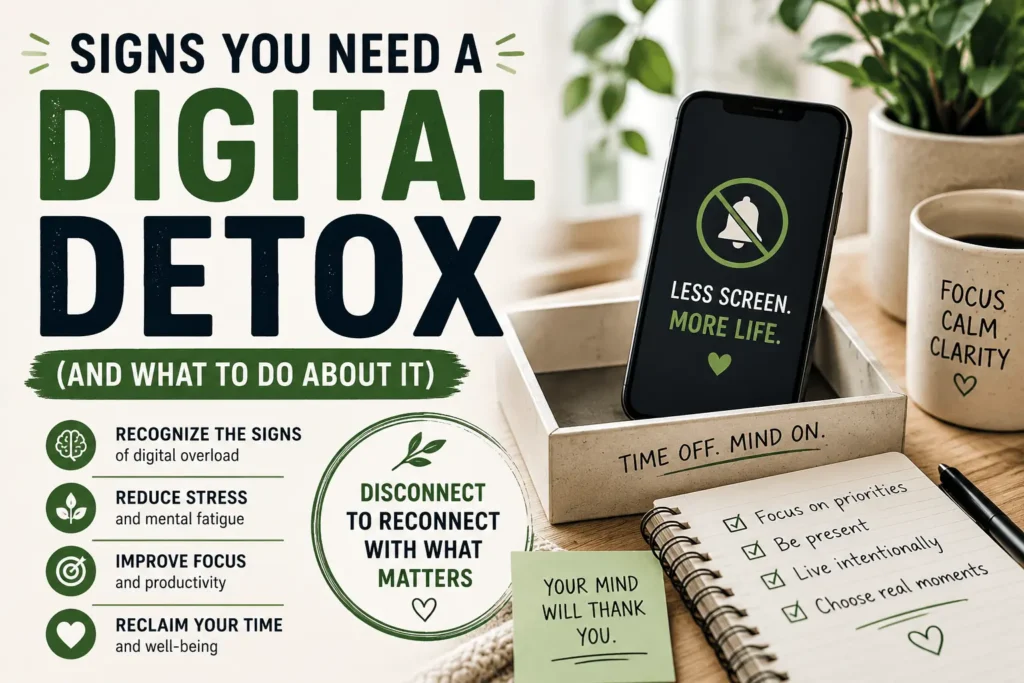
Technology has become an essential part of everyday life. We use our phones to communicate, work, learn, shop, and stay entertained. While technology offers many benefits, spending too much time connected can sometimes leave us feeling mentally exhausted, distracted, and overwhelmed.
If you’ve been feeling drained, struggling to focus, or constantly reaching for your phone without thinking, your mind may be telling you it’s time for a digital detox.
A digital detox doesn’t mean abandoning technology completely. Instead, it means creating healthier boundaries with your devices so you can regain focus, reduce stress, and feel more present in your daily life.
In this guide, we’ll explore the most common signs that you need a digital detox and simple ways to build healthier digital habits.
What Is a Digital Detox?
A digital detox is a period of intentionally reducing your use of smartphones, social media, email, and other digital devices.
The goal is not to eliminate technology but to create a healthier relationship with it.
Taking regular breaks from screens can help improve focus, reduce mental fatigue, and give your brain time to recover from constant stimulation.
If you frequently find yourself checking your phone without realizing it, you may also benefit from reading How to Stop Checking Your Phone Every Few Minutes.
Why Digital Overload Is Becoming More Common
Every day, we are exposed to:
- Notifications
- Emails
- Social media updates
- News alerts
- Videos
- Messages
- Online advertisements
Our brains were never designed to process endless streams of information 24 hours a day.
When we constantly consume digital content, our attention becomes fragmented, making it harder to focus and relax.
Many people experiencing digital overload also notice symptoms discussed in How to Reduce Digital Overload and Feel Less Drained.
10 Signs You Need a Digital Detox
1. You Check Your Phone Without Thinking
One of the biggest warning signs is reaching for your phone automatically.
You may unlock your device dozens of times each day without any specific reason.
Many people open social media apps or check notifications simply out of habit rather than necessity.
2. You Struggle to Focus on Important Tasks
Have you noticed that your attention span feels shorter than it used to?
Constant digital interruptions can make it difficult to concentrate on work, study, or even simple daily activities.
Every notification competes for your attention, making deep focus harder to achieve.
3. You Feel Mentally Exhausted
Even after a relatively easy day, you may feel mentally drained.
This often happens because your brain is processing large amounts of information throughout the day.
If this sounds familiar, you may relate to Why You Feel Emotionally Overstimulated All the Time.
4. You Feel Anxious When Your Phone Isn’t Nearby
Do you feel uncomfortable when your phone battery is low or when your device isn’t within reach?
This dependency can be a sign that your relationship with technology has become unhealthy.
5. You Spend More Time Scrolling Than You Planned
You open an app intending to spend two minutes checking something, but twenty minutes later you’re still scrolling.
This pattern is common and often leads to wasted time and reduced productivity.
6. Your Sleep Quality Has Declined
Excessive screen time, especially before bed, can interfere with healthy sleep habits.
The blue light emitted by devices may disrupt your body’s natural sleep cycle, making it harder to fall asleep and stay asleep.
7. You Constantly Feel Behind
Ironically, consuming more information doesn’t always make us more productive.
Instead, it can create the feeling that we’re always trying to catch up.
The result is increased stress and reduced mental clarity.
8. You Find It Difficult to Relax
Many people reach for their phones whenever they have a free moment.
Instead of allowing the mind to rest, they continue consuming information, which can make relaxation feel impossible.
9. Real-Life Activities Feel Less Interesting
If hobbies, conversations, or everyday experiences seem less engaging than scrolling through your phone, your brain may have become accustomed to constant digital stimulation.
10. You Feel More Stressed Than Usual
Excessive exposure to news, notifications, and social media can increase stress levels.
Many people notice a significant improvement in their mood after reducing screen time.
What Happens When You Take a Digital Detox?
Even a short break from digital distractions can produce noticeable benefits.
Many people report:
- Better concentration
- Improved sleep quality
- Reduced stress
- Increased productivity
- Greater mental clarity
- More meaningful personal interactions
A digital detox gives your brain an opportunity to slow down and recover from constant stimulation.
Simple Ways to Start a Digital Detox
Turn Off Non-Essential Notifications
Many notifications don’t require immediate attention.
Disabling unnecessary alerts can dramatically reduce distractions throughout the day.
Create Screen-Free Times
Choose specific periods when you intentionally stay away from screens.
Examples include:
- During meals
- Before bedtime
- During focused work sessions
- While spending time with family
Keep Your Phone Out of Sight
Research suggests that simply seeing your phone can reduce focus.
When working or relaxing, place your device in another room or out of reach.
Replace Scrolling With Healthier Activities
Instead of automatically reaching for your phone, try:
- Reading
- Walking
- Journaling
- Stretching
- Meditation
These activities help calm the mind and reduce dependency on digital stimulation.
Set Daily Screen Time Limits
Many smartphones now include screen-time tracking features.
Use these tools to become more aware of your habits and gradually reduce unnecessary usage.
How to Build Healthier Digital Habits Long-Term
A successful digital detox isn’t about perfection.
The goal is to create sustainable habits that support your well-being.
Focus on:
- Being intentional with technology
- Using devices for specific purposes
- Limiting mindless scrolling
- Protecting your focus
- Prioritizing real-life experiences
If you’re trying to create a calmer and more organized daily routine, you may also find value in How to Plan Your Day Effectively Without Feeling Stressed and How to Reduce Mental Clutter and Feel More Clear-Headed.
Key Takeaways
Technology should support your life, not control it.
You may need a digital detox if you:
- Constantly check your phone
- Struggle to focus
- Feel mentally exhausted
- Experience increased stress
- Spend excessive time scrolling
- Have difficulty relaxing without screens
Small changes can make a big difference.
By creating healthier digital habits, you can improve focus, reduce stress, and build a more balanced relationship with technology.
Frequently Asked Questions
What is a digital detox?
A digital detox is a period of reducing screen time and limiting the use of digital devices to improve focus, reduce stress, and support mental well-being.
How long should a digital detox last?
A digital detox can last anywhere from a few hours to several days. Even small daily breaks from screens can provide noticeable benefits.
Does a digital detox improve mental health?
Many people report feeling less stressed, more focused, and emotionally balanced after reducing excessive screen time.
What are the most common signs of digital overload?
Common signs include constant phone checking, mental fatigue, reduced focus, sleep problems, and difficulty relaxing.
Do I have to stop using technology completely?
No. The goal is to use technology intentionally and create healthier habits, not eliminate it entirely.