
Introduction
Have you ever sat down to work on something important and realized you couldn’t stay focused for more than a few minutes?
Maybe you start a task, get distracted by your phone, check an email, open another tab, and suddenly forget what you were supposed to be doing.
If you’ve been asking yourself, “Why can’t I focus anymore?” you’re not alone.
Many people feel like their attention span has become shorter over the last few years. Constant notifications, information overload, stress, and busy schedules make it harder than ever to concentrate.
The good news is that losing focus isn’t usually a permanent problem. In many cases, there are specific reasons behind it—and practical steps you can take to improve your concentration again.
Quick Summary
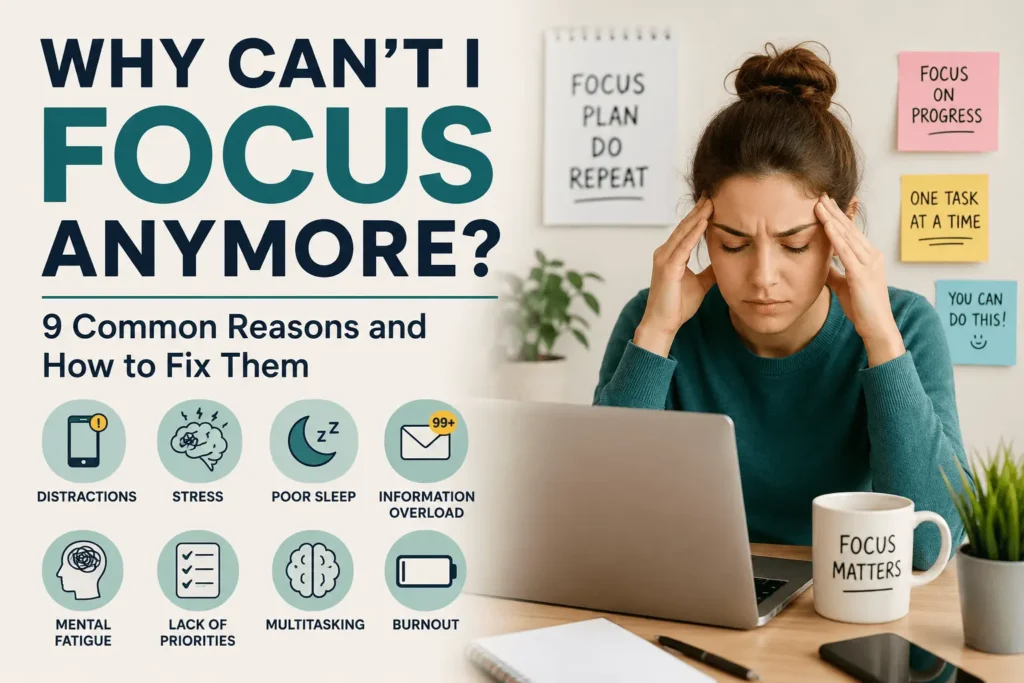
If you struggle to focus, common causes include:
- Poor sleep
- Constant digital distractions
- Multitasking
- Mental overload
- Chronic stress
- Lack of clear priorities
- Information overload
- Burnout
- Lack of breaks
Understanding the cause is the first step toward improving your attention and productivity.
1. You’re Constantly Switching Between Tasks
Many people believe multitasking makes them more productive.
In reality, your brain performs better when it focuses on one task at a time.
Every time you switch between tasks, your brain uses energy to reorient itself. This process is called context switching, and it can significantly reduce concentration.
What to Do
- Focus on one task at a time
- Close unnecessary tabs
- Turn off notifications during focused work
If task switching is a frequent problem, read How to Stop Feeling Mentally Scattered and Regain Focus.
2. Your Brain Is Overloaded With Information
Your brain processes thousands of pieces of information every day.
Emails.
Social media posts.
News alerts.
Messages.
Videos.
Articles.
When your mind is constantly consuming information, it has less energy available for deep thinking.
What to Do
- Reduce unnecessary information sources
- Schedule specific times to check news and social media
- Create periods of distraction-free work
3. You’re Not Getting Quality Sleep
Sleep plays a major role in memory, attention, and concentration.
Even if you’re getting enough hours, poor-quality sleep can affect your ability to focus.
Common signs include:
- Difficulty concentrating
- Forgetfulness
- Mental sluggishness
- Reduced productivity
What to Do
- Maintain a consistent bedtime
- Limit screens before sleep
- Create a calming evening routine
You may also find How to Stop Overthinking at Night and Sleep Peacefully helpful.
4. Stress Is Consuming Your Mental Energy
When you’re stressed, part of your attention is constantly occupied by worries and unresolved problems.
Even if you’re trying to focus on work, your mind may still be processing concerns in the background.
What to Do
- Write down worries and tasks
- Take short mental breaks
- Focus on what you can control
If stress has been building for a while, consider reading How to Recharge Mentally After a Stressful Day.
5. You’re Trying to Remember Too Much
Many people use their brain as a storage system.
Appointments.
Ideas.
Tasks.
Responsibilities.
The more information you try to remember, the harder it becomes to focus.
What to Do
Create an external system.
Use:
- A notebook
- A planner
- A task manager
This frees up mental space for concentration.
Related reading: How to Create a Life Admin Day and Stay on Top of Responsibilities.
6. Your Phone Is Interrupting Your Attention
Most people underestimate how often they check their phone.
A quick glance can easily turn into several minutes of distraction.
Over time, this trains your brain to seek constant stimulation.
What to Do
- Keep your phone out of reach
- Turn off non-essential notifications
- Create phone-free work periods
Read How to Stop Checking Your Phone Every Few Minutes for additional strategies.
7. You’re Mentally Exhausted
Sometimes focus problems are simply a sign that your brain needs rest.
You may not feel physically tired, but your mental energy is depleted.
Signs include:
- Difficulty making decisions
- Lack of motivation
- Feeling overwhelmed
- Reduced concentration
Learn more in Why Your Brain Feels Tired Even When You Didn’t Do Much.
8. You Don’t Have Clear Priorities
When everything feels important, your brain struggles to decide where to focus.
This creates decision fatigue and reduces concentration.
What to Do
At the start of each day:
- Identify your most important task
- Limit your priorities to 3 key items
- Focus on progress, not perfection
Related article: How to Create a Daily To-Do List That You’ll Actually Follow.
9. You’re Rarely Taking Real Breaks
Many people work for hours without meaningful recovery.
Eventually, concentration declines.
Your brain needs periods of rest to maintain performance.
What to Do
- Take short walks
- Stretch
- Step away from screens
- Practice deep breathing
Small breaks often improve productivity more than pushing through fatigue.
When Should You Be Concerned?
Occasional focus problems are normal.
However, if concentration issues are:
- Persistent
- Affecting work or studies
- Interfering with daily life
consider speaking with a healthcare professional.
Sometimes underlying health conditions may contribute to attention difficulties.
Final Thoughts
If you’ve been wondering why you can’t focus anymore, remember that concentration problems are often caused by habits, routines, and environmental factors rather than a lack of ability.
Small improvements—such as reducing distractions, improving sleep, managing stress, and focusing on one task at a time—can make a significant difference.
The goal isn’t perfect focus.
The goal is creating an environment where focus becomes easier and more natural.
FAQ
Why can’t I focus anymore even when I’m motivated?
Motivation alone isn’t always enough. Poor sleep, stress, distractions, and mental overload can all affect concentration even when you want to focus.
Can stress cause concentration problems?
Yes. Stress consumes mental energy and makes it harder for your brain to stay focused on important tasks.
Does social media affect attention span?
Frequent social media use can encourage constant task switching and make sustained focus more difficult over time.
How long does it take to improve focus?
Many people notice improvements within a few days of reducing distractions and improving sleep habits, although long-term improvements often take several weeks of consistent practice.
Why do I feel mentally tired all the time?
Mental fatigue can result from stress, poor sleep, information overload, excessive screen time, or lack of recovery periods throughout the day.